
Agricultural Cooperatives Need Transparent Financial Records
For Liberia's agricultural cooperatives to thrive, members need transparent financial records, a lesson in enterprise capability drawn from development finance trends in West Africa.

Editorial analysis. This piece reflects Executive Tea Chronicle's interpretation and editorial mission, not an official government position.
Producer cooperatives are a cornerstone of agricultural development, offering smallholder farmers a path to collective bargaining power and access to larger markets. However, a common challenge for such groups is the risk of declining internal trust. When members cannot easily see or understand how their collective finances are managed, suspicion can arise. Ambiguity around payouts, deductions, or record-keeping can weaken cooperation, potentially leading to member disengagement or the group's dissolution.
This is not a failure of character, but a failure of systems. The antidote is not simply better intentions, but better business practices, specifically transparent financial record-keeping. Building this capacity is fundamental to transforming a loose association of farmers into a credible commercial enterprise. The challenge is to establish systems that are not only accurate but also understandable to every contributing member, ensuring that shared effort leads to shared, verifiable success.
What the comparison shows
While every national context is unique, the priorities of international development finance can provide a useful lens on what constitutes modern enterprise support. For instance, the design of a project in Burkina Faso shows a clear focus on building foundational business capabilities. According to a World Bank project appraisal document from April 2023, the Entrepreneurship, Skills, and Technology Project for Burkina Faso was established to increase access to finance, technology, and a trained workforce for micro, small, and medium-sized enterprises (MSMEs).
The project’s components reveal a strategic logic applicable far beyond its borders. The plan includes measures for strengthening MSME capabilities and technology adoption, as well as developing a productive and entrepreneurial labor force. The project design document states these skills would be built through both formal technical training and non-formal opportunities. The clear implication is that for small enterprises to grow and access finance, they must first master core business functions. This focus on capability, technology, and skills provides a powerful argument for prioritizing the same fundamentals within agricultural producer organizations in Liberia.
Analysis: applying the lesson in Liberia
Applying this lesson in a Liberian context could involve treating agricultural cooperatives as the micro, small, and medium-sized enterprises they often function as. The most immediate application is in financial management. A key step could be for cooperatives to adopt simple, transparent bookkeeping systems that track the full cycle of their commercial activity.
In a hypothetical example, a cooperative could implement a system—whether a well-structured ledger book or a simple spreadsheet program—with the following features:
Member Delivery Logs: Each time a member delivers produce, the date, member name, and weight are recorded in a central log that is open for member inspection. Each member receives a receipt for their delivery.
Transparent Expense Tracking: All shared costs, such as transport, storage fees, or certification costs, are documented with receipts. These costs are then allocated transparently, for example on a per-kilogram basis, and recorded in the main ledger.
Clear Payout Statements: After a sale to a buyer, the cooperative can generate a simple statement for each member. This statement could show the member’s total kilograms delivered, the final sale price per kilogram, the itemized deductions for shared costs, and the final net payment due.
This approach aims to make financial accounting a clear, communicative process. The goal is not just accuracy but legibility. When a member can trace the journey from their harvest to their payment, trust can be built on a foundation of verifiable data, not just faith in leadership.
Tradeoffs and implementation risks
This proposal is not without challenges. A primary risk is capacity. For example, a common consideration in such initiatives is that some cooperative leaders and members may have limited literacy or digital skills, which could make even simple spreadsheets seem intimidating. Any new system would likely require significant and sustained training, focused on practical use rather than abstract accounting theory. There is also the cost of technology—a shared laptop, a printer, or even just well-designed stationery—which can be a barrier for nascent groups.
Furthermore, a transparent system is only as good as the governance that supports it. A clear process would be needed for members to question discrepancies and inspect source documents, such as fuel receipts or sales contracts. Without this, a new system could simply replicate underlying governance issues in a digital format. Finally, as a general principle of organizational change, leaders who benefit from controlling information may resist a move toward transparency that diminishes their perceived power.
What global competence looks like here
Overcoming these risks is essential for achieving what can be called global competence. A cooperative that can produce clear, reliable financial statements is not just a more cohesive internal unit; it is a more credible commercial partner. Such a group is better positioned to negotiate with large-scale buyers who demand professionalism and predictability. Critically, it becomes a far more attractive candidate for formal credit. As the 2023 Burkina Faso project design suggests, access to finance is linked to enterprise capability. A bank is far more likely to extend a loan to a cooperative that can present audited financial records and clear cash-flow projections than to one that cannot.
Mastering financial transparency is therefore not merely an administrative task. It is a strategic imperative that prepares a cooperative to engage with the broader economy on professional terms. The associated training—in using the system, understanding financial statements, and fulfilling fiduciary responsibilities—directly builds the “productive and entrepreneurial labor force” that development experts identify as key to growth.
Bottom line
For the agricultural sector in Liberia to move up the value chain, its foundational units—the cooperatives—would need to be strong. Their strength often depends on the trust of their members, and that trust can be earned through transparency. Prioritizing the adoption of clear financial record-keeping, and the skills needed to manage it, can help producer groups become more resilient, more credible, and ultimately more profitable. This is not about importing a foreign model, but about embracing a universal principle of business: what gets measured, managed, and communicated gets done right.
Sources
Burkina Faso - Entrepreneurship, Skills, and Technology Project (Project Appraisal Document, P177005) — World Bank, published 2023-04-17
Related reading

Agricultural Technology Should Begin With a Farmer Problem
For agri-tech to succeed in Liberia, it must move beyond hype and be co-designed with farmers to solve a specific, identified problem, adapting technology to local conditions rather than imposing generic solutions.
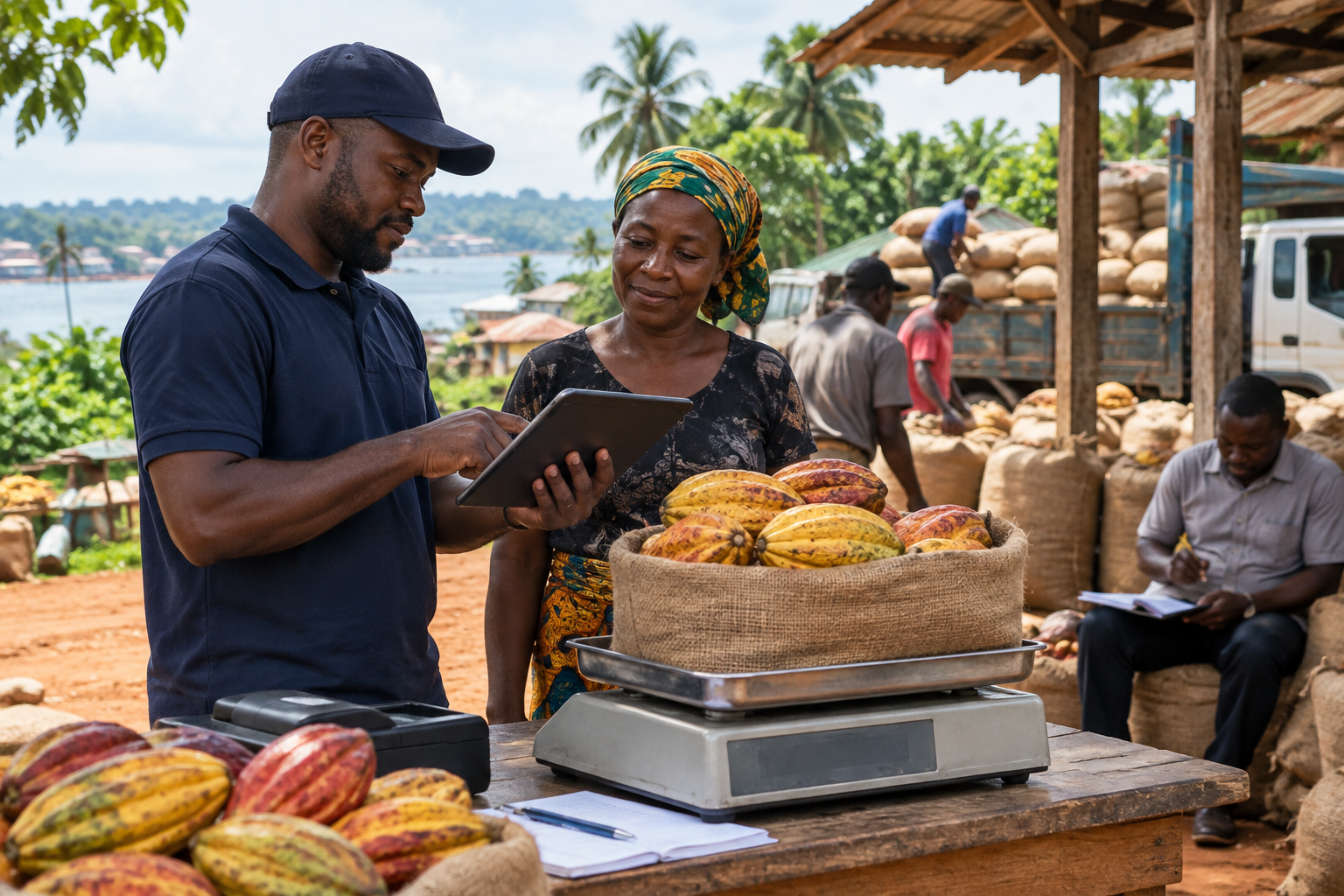
Supply Chain Records Can Make Trade More Dependable
Applying the principles of Kenya's national digital strategy to Liberian agriculture could create a system of shared records, reducing disputes and making trade more dependable for farmers and buyers alike.
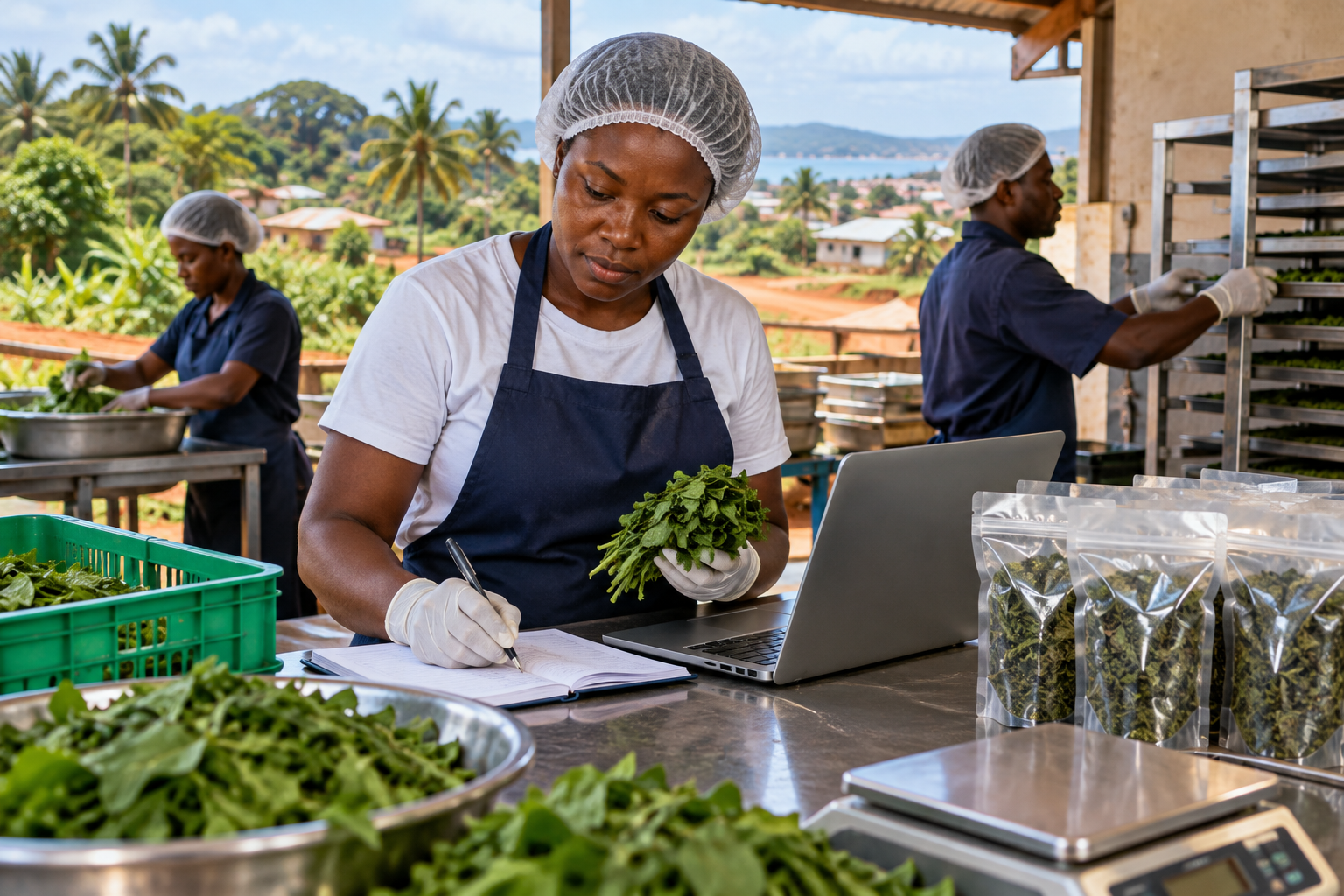
Food Processing Needs Consistent Quality Records
To scale up, Liberian food processors must adopt disciplined record-keeping systems that link technology and workforce training, building the verifiable consistency that commercial buyers demand.