
Logistics Technology Should Reveal Where Delays Occur
Inspired by Kenya's digital service agenda, Liberia could build global competitiveness by using a shared logistics tracking system to reveal and resolve the specific choke points that delay the movement of goods.
Editorial analysis. This piece reflects Executive Tea Chronicle's interpretation and editorial mission, not an official government position.
Analysis. Drafted from cited World Bank sources for editor review; Liberia proposals are the magazine's analysis, not source findings.
Source scope: the cited sources describe historical project designs and financing announcements (2021–2024), not verified current implementation outcomes. No new Liberia-specific factual evidence was checked for this draft; Liberia scenarios are hypothetical.
For any business moving goods from farm or factory to market, time is a critical factor, affecting everything from product quality to contract fulfillment. In many economies, logistical journeys can be difficult to track. Without clear data, the reasons for delays may be attributed to a range of potential issues, from road conditions to administrative processes. This type of uncertainty can pose a challenge for economic activity by making planning difficult and potentially increasing costs for producers and consumers.
While physical infrastructure investment is often a focus, significant progress can also be made by improving information flows. A key objective could be to make the movement of goods more visible. If the location and duration of a delay are known, it becomes possible to identify the specific problem. For example, data could help determine whether a bottleneck is caused by a slow administrative step at a specific checkpoint or by inefficient unloading at a destination. Without data, problem-solving can be based on assumptions; with data, management can be more targeted.
This logic of using digital tools for transparency and efficiency is a component in the design of national strategies in other countries. Examining such models could offer insights into how their core principles might be adapted to address commercial logistics challenges.
What the comparison shows
An initiative in Kenya, outlined in a World Bank press release from April 5, 2023, provides an example of a project designed to build a data-driven economy. On that date, the World Bank board approved $390 million in financing for the first phase of the Kenya Digital Economy Acceleration Project. According to the announcement, the project’s stated objective is to use connectivity as a foundation for improving the delivery of selected government services and building digital skills, not just to provide internet access.
The project was announced with a multi-phase design. According to the World Bank, the first phase (2023-2028) focuses on expanding access to high-speed internet and improving education and selected government services, with a stated goal of boosting broadband coverage for over 70% of the population residing in rural and underserved areas. A planned second phase (2026-2030) would concentrate on building a “data driven and secure environment for enhanced digital service delivery.” The announcement notes this initiative is part of a broader Kenyan ICT Master Plan which aims to digitize 80% of public services and position the country as a regional ICT hub. The project’s design suggests a focus on infrastructure as a means to create systems that can run on reliable information.
Analysis: applying the lesson in Liberia
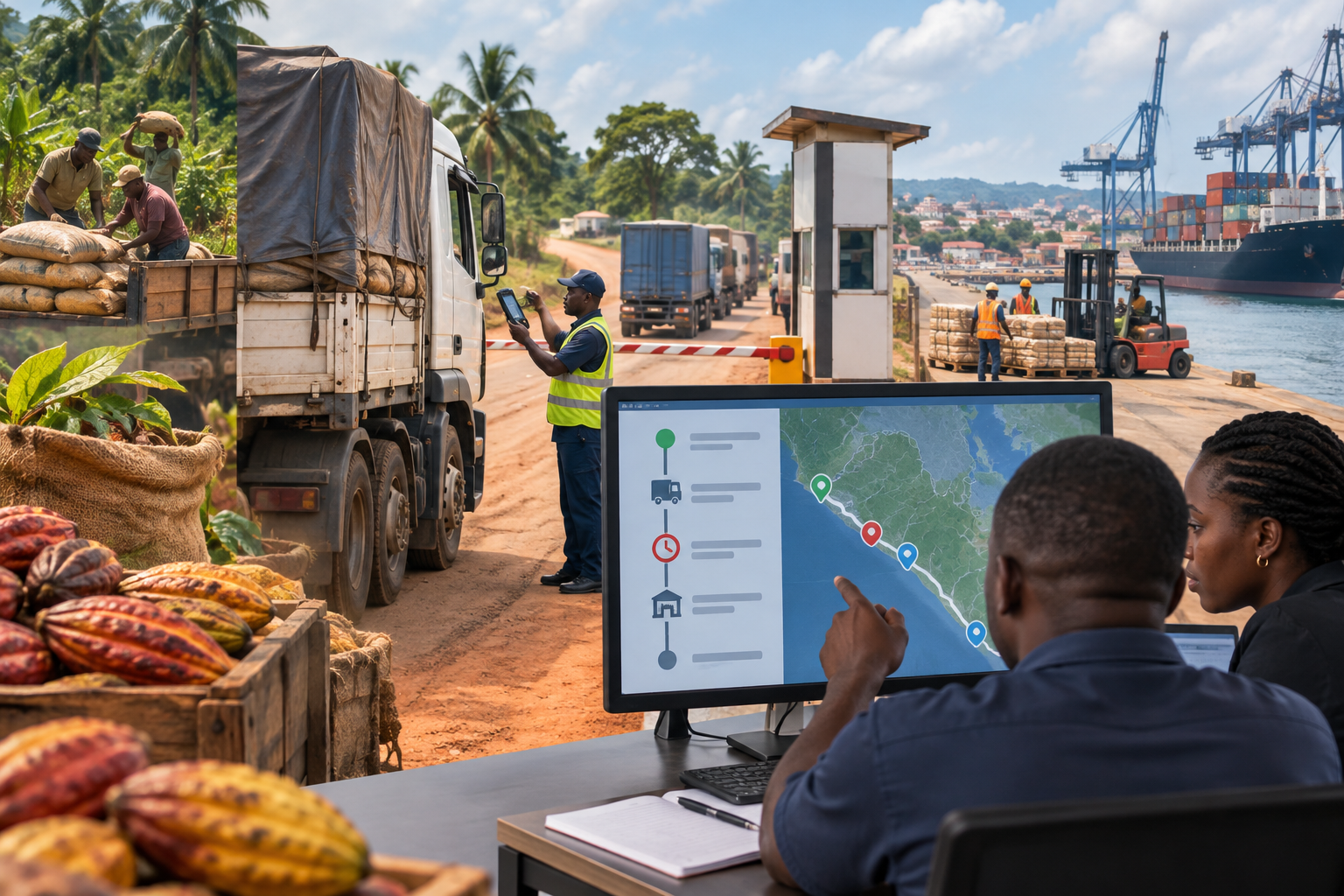
Liberia could apply similar systems-thinking to its physical economy, specifically to agricultural and industrial logistics. A pilot program could be centered on a common logistics tracking platform. Such a system would not necessarily need to be a complex, top-down government mandate at first. It could be developed as a shared utility that allows participating businesses and agencies to see the same event timeline for a single shipment.
A possible mechanism could be designed for simplicity. In a hypothetical example, a unique digital reference number could be created when a shipment begins. Each party handling the goods could use a basic application to record key events. A hypothetical wholesaler shipping goods from Gbarnga to Monrovia might log the moment a truck is dispatched. In a hypothetical port-service example, if a proposed online tariff calculator were part of a larger system, the truck driver could present a QR code at a checkpoint. A hypothetical inspector could scan it to log the arrival time, and scan it again upon release, allowing the platform to record the duration of the stop. Finally, a warehouse manager in Monrovia could scan the code to confirm final delivery. The data could be shared based on clear permissions, protecting commercial confidentiality while creating an end-to-end record of the journey.
A primary benefit could be the aggregation of anonymized data, in addition to tracking for the owner of the goods. Over time, such a system could reveal patterns. For example, it might show that shipments are consistently delayed by an illustrative 90 minutes at a specific location, or that goods from a certain region wait an illustrative six hours for unloading at a particular distribution hub. This could help shift the focus from general discussions about delays toward identifying and solving specific operational bottlenecks.
Tradeoffs and implementation risks
A system built on data sharing immediately raises concerns about privacy and commercial security. The architecture must be designed with strict access controls from the start. A shipper should only see their own shipment's data. A public agency’s access should be limited to the specific information legally required for its function, such as inspection times, not the cargo’s value or final buyer. The goal is transparency of process, not of commerce.
A common risk in digital programs is the "digital divide." Any proposed system would need to account for potential variations in digital infrastructure. For example, it would need to be determined whether the system could function in areas with intermittent connectivity, perhaps by logging events on a device offline and uploading the data when a signal becomes available. To manage this risk, a pilot could focus on an economic corridor where network coverage is determined to be sufficient to prove the concept before wider expansion.
The greatest risk, however, is not technological but human. The system is only as good as the data entered. It requires buy-in from transport operators, warehouse managers, and public officials. Success depends on demonstrating that accurate data entry benefits everyone by creating a more fluid and predictable system, ultimately reducing idle time and operational costs for all involved.
The Importance of Predictability for Trade
In a globalized economy, predictability is a key consideration for trade partners. International buyers, shipping lines, and investors often value dependable timelines. The ability to provide a customer with a precise delivery window, for example that a container will arrive in an illustrative 72 hours, plus or minus two, can be a mark of a highly organized export operation. The ability to analyze a delay and explain its cause with data—for instance, a road closure causing a two-hour reroute—can build trust and help position an enterprise as a credible global partner.
Furthermore, managerial competence grows from having the right information. The platform’s value is realized when a manager can distinguish between a one-time incident, like a flat tire, and a recurrent system problem, like a procedural bottleneck. This is what data-driven decision-making means in practice: using information to focus limited resources on the problems that have the biggest impact.
Bottom line
The design of Kenya’s strategy for a data-driven environment for public services provides an instructive framework. It is possible that significant economic benefits could be realized in Liberia by applying that logic to a targeted area like the movement of physical goods. A shared logistics tracking platform, piloted on a key commercial route, could do more than just follow shipments. It could help to illuminate potential bottlenecks in the economy. By making delays visible, measurable, and specific, such a system could empower businesses and public agencies to work together on solving clearly defined problems, helping to create the dependable flow of goods that is essential for national prosperity.
Sources
- Kenya and the World Bank Group Provide a $390 Million Boost the Digital Economy — World Bank, published 2023-04-05
Related reading

Agricultural Technology Should Begin With a Farmer Problem
For agri-tech to succeed in Liberia, it must move beyond hype and be co-designed with farmers to solve a specific, identified problem, adapting technology to local conditions rather than imposing generic solutions.
Supply Chain Records Can Make Trade More Dependable
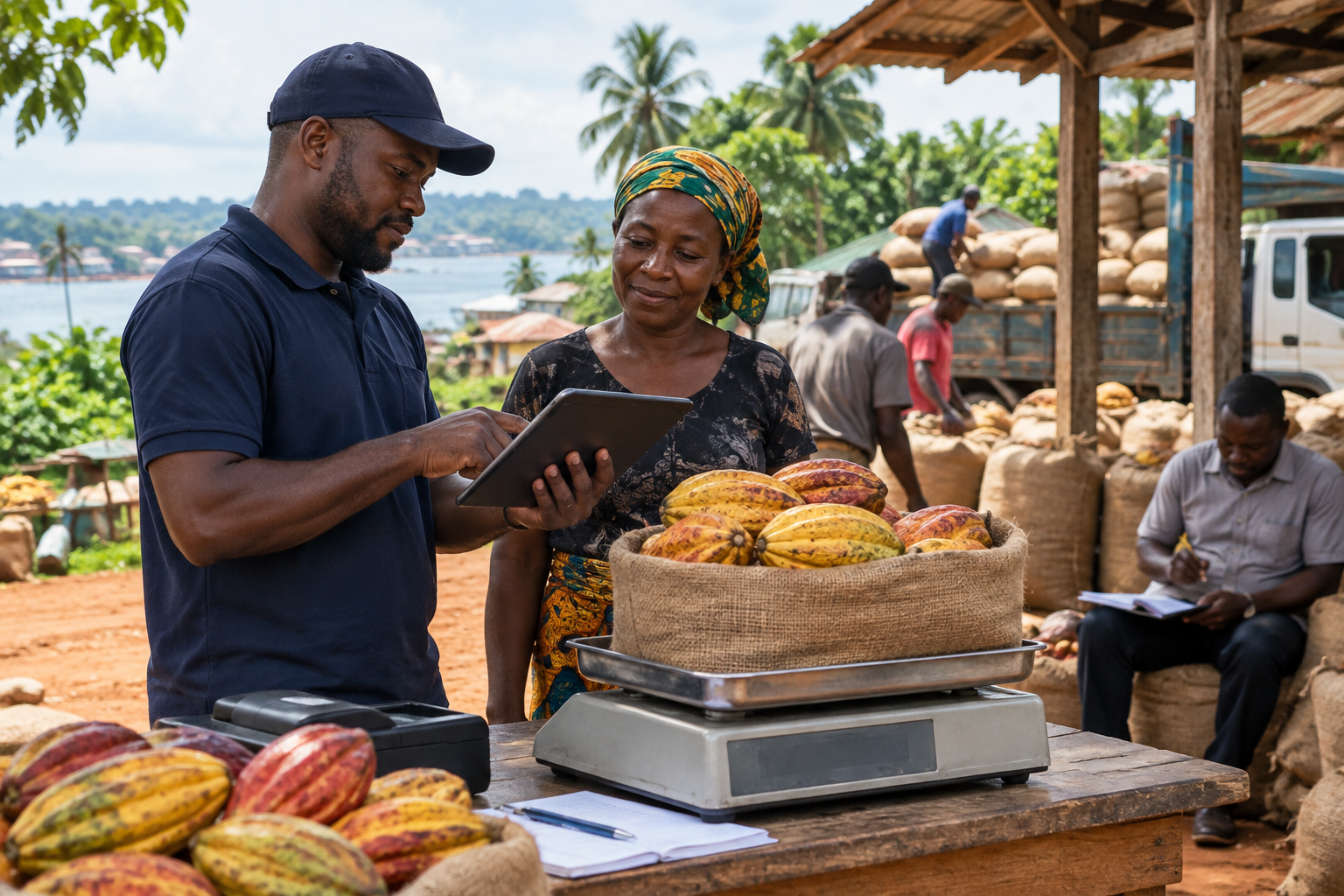
Applying the principles of Kenya's national digital strategy to Liberian agriculture could create a system of shared records, reducing disputes and making trade more dependable for farmers and buyers alike.

Food Processing Needs Consistent Quality Records
To scale up, Liberian food processors must adopt disciplined record-keeping systems that link technology and workforce training, building the verifiable consistency that commercial buyers demand.