
Career Guidance Should Be Based on Real Tasks
To bridge the gap between education and employment, Liberia must shift from listing fashionable job titles to providing young people with detailed, task-based information on real career pathways and entry requirements.

Editorial analysis. This piece reflects Executive Tea Chronicle's interpretation and editorial mission, not an official government position.
Analysis. Drafted from cited World Bank sources for editor review; Liberia proposals are the magazine's analysis, not source findings.
Source scope: the cited sources describe historical project designs and financing announcements (2021–2024), not verified current implementation outcomes. No new Liberia-specific factual evidence was checked for this draft; Liberia scenarios are hypothetical.
For many young people, the path from education to employment can be unclear. A common challenge in career guidance is a focus on job titles—such as economist, IT specialist, or project manager—that may be disconnected from the day-to-day reality of the work. If students pursue qualifications for roles they do not fully understand, a potential outcome is a mismatch between their training and the needs of the workplace. Such a situation can contribute to underemployment and skills gaps, which in turn can constrain economic development.
An alternative approach is possible. Effective career guidance could focus not on job titles, but on tasks. The goal would be to provide a practical understanding of what a professional does, what foundational skills are required for a role, and what tangible evidence of competence an employer might look for. In a hypothetical example, instead of advising a student to become a ‘logistics officer,’ guidance could show what it might mean to track a shipment. This could include illustrating the types of software used or the kind of documentation that must be completed accurately.
A task-based approach could demystify professions and help young people make more informed choices. It could anchor educational pursuits in the practical demands of the economy, potentially making graduates more competitive and adaptable. By focusing on the ‘what’ and ‘how’ of a job, such a system could contribute to building a workforce prepared for real-world challenges.
What the comparison shows
National efforts to build a competitive labor force often require a clear vision for skills development. While circumstances differ, the design of programs in other countries can provide a useful lens. For instance, a World Bank press release from April 2023 detailed the approval of financing for the Kenya Digital Economy Acceleration Project. The first phase of this multi-year program, announced to run from 2023 to 2028, includes among its primary goals the intention to build skills for the regional digital economy.
According to the 2023 announcement, the project was designed with the aim of shrinking disparities in digital skills and developing a competitive labor force. The project's design connects infrastructure with human capital. Its stated objectives included expanding Kenya's fiber optic backbone and last-mile connectivity—with a goal of reaching over 70% of the population in rural and underserved areas—and also boosting the digital skills needed to use that infrastructure. This linkage between tools and talent was a reported component of the project's design, reflecting a stated plan to help transform the country into a regional hub.
Analysis: applying the lesson in Liberia
One potential lesson from such an approach is the importance of practical skills alignment. This analysis proposes a hypothetical model for Liberia: a national career information platform with a focus on granularity and verification. Such a ‘Career Pathways Platform’ could host detailed profiles of specific roles within the national economy.
Each profile on such a platform could go beyond a generic job description. It might specify:
- Core Daily Tasks: What does a person in this role do? In a hypothetical example, if a wholesaler in Gbarnga needed a bookkeeper, the profile could describe the daily task of reconciling cash sales against inventory using a certain type of accounting software, rather than just listing ‘financial management’ as a skill.
- Entry Requirements: The profile could list potential entry-level qualifications. This might include degrees, specific technical certificates, licenses, or competencies that employers in a given sector indicate are important.
- Evidence of Competence: How might a candidate demonstrate they can do the job? For a graphic designer, an example could be a portfolio with specific types of work samples. For a construction foreman, it might be a practical test on reading blueprints. The platform could make such illustrative benchmarks public.
To make the information more tangible, the platform could feature professionals demonstrating representative tasks in short videos. For example, one could imagine a video of an auto mechanic explaining how to diagnose an engine fault, or a public health worker showing how a community health report is compiled. The platform could also aim to link role profiles to educational institutions or training programs that offer relevant qualifications, creating a clearer potential path from learning to earning.
Tradeoffs and implementation risks
Such a platform would be a complex information infrastructure project, not a simple website, and it would carry significant risks. Its value would depend on the accuracy and timeliness of its information, as outdated profiles could be misleading. Sustaining it would likely require a dedicated team for continuous verification with businesses, trade associations, and public sector entities—a potentially resource-intensive commitment.
There would also be a risk of systemic bias. Without deliberate effort, such a platform could disproportionately feature formal, urban-based white-collar jobs, potentially overlooking important roles in sectors like agriculture, artisanship, and the informal economy. Ensuring geographic and sectoral equity would be a primary implementation challenge. Finally, the platform would need to be framed as an information tool, not a job placement agency. Its purpose would be to help individuals make better plans, not to create jobs directly. Managing user expectations would be critical to its long-term credibility.
What global competence looks like here
In the modern economy, competence can be defined not just by credentials, but by the ability to navigate the labor market strategically. This could mean an individual can assess their own skills, identify a gap between their capacity and their goals, and find clear information on steps to close that gap. A task-based career platform could be an investment in this form of competence.
Such a tool could equip young people with information to help them plan their careers and encourage proactive professional development. This could contribute to a resilient and adaptable workforce capable of responding to economic change, whether from new technology, new investment, or shifting trade patterns. It could empower the individual to take a more active role in planning their career path.
Bottom line
To better align education with economic needs, a change in how careers are discussed may be warranted. A focus could shift from job titles to the practical mastery of tasks. Building a verified, task-oriented career information platform would be an ambitious undertaking. Yet, it represents a type of foundational investment in human capital that could yield significant long-term benefits. By providing clearer and more practical information about the world of work, such a tool could better equip citizens to navigate their career paths and contribute to economic prosperity.
Sources
- Kenya and the World Bank Group Provide a $390 Million Boost the Digital Economy — World Bank, published 2023-04-05
Related reading
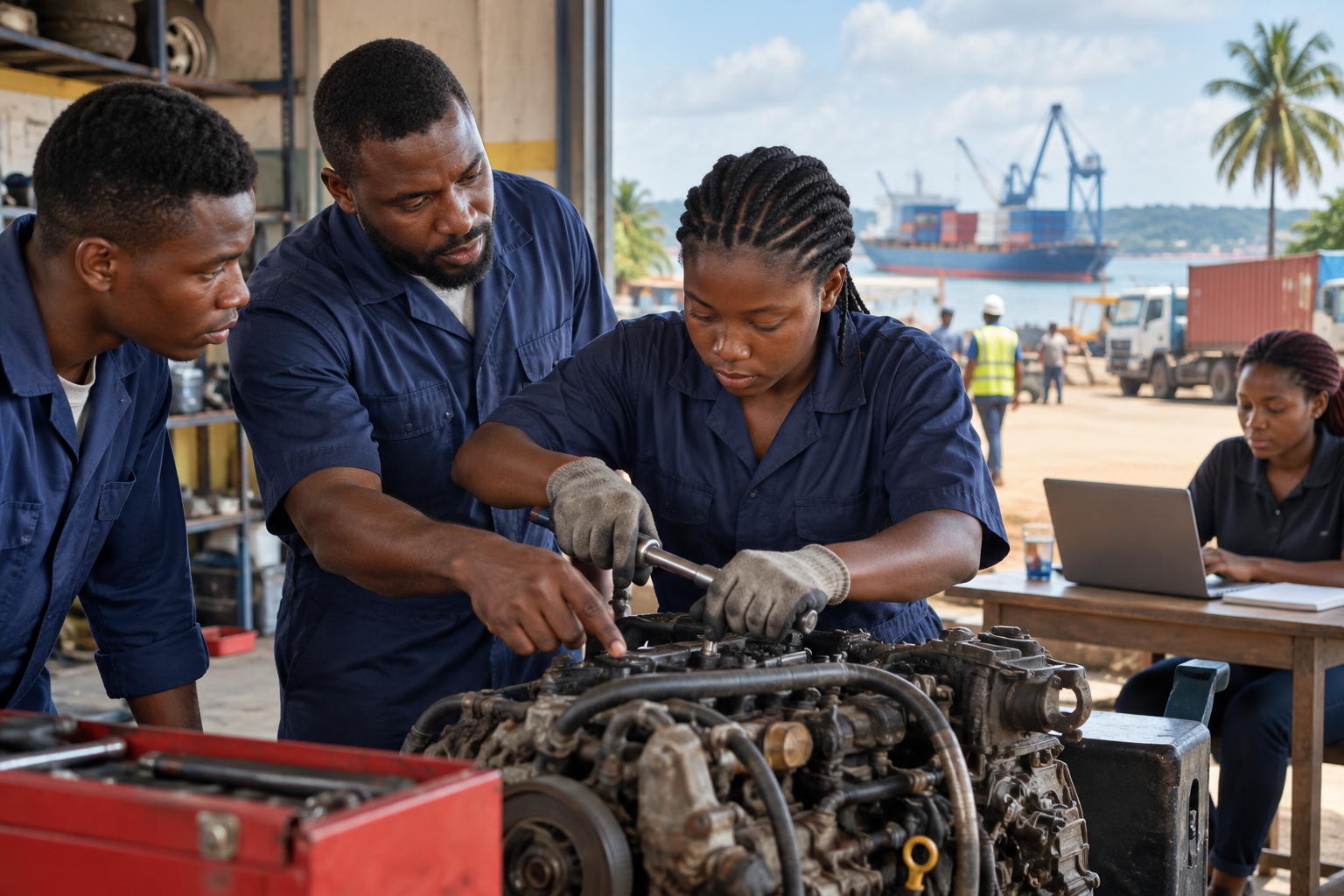
Training Should Begin With the Work Employers Need
To bridge the skills gap, Liberia's training programs should be redesigned around specific, employer-defined tasks, transforming certificates into verifiable portfolios of competence that businesses can trust.
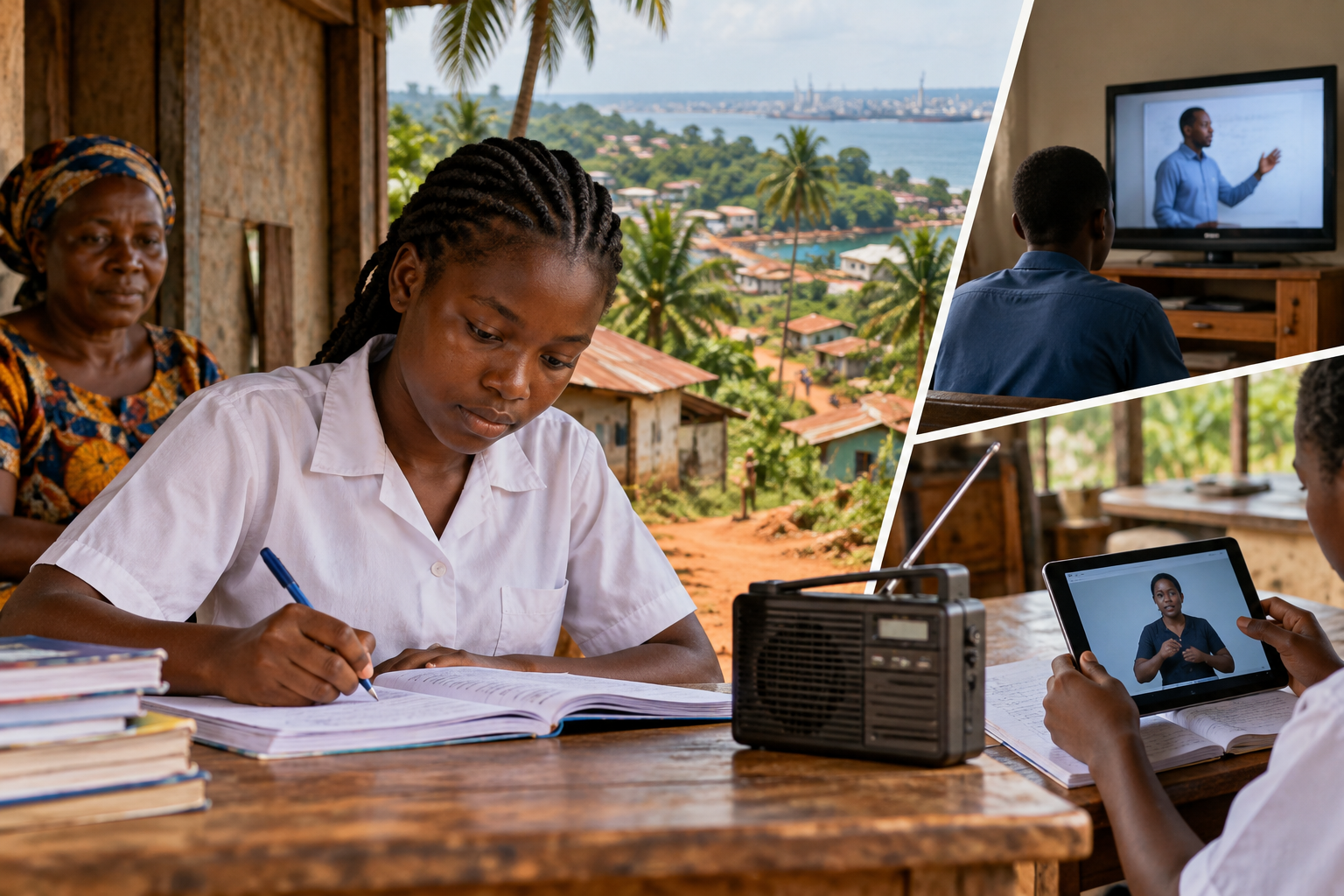
Digital Learning Must Account for Unequal Access
Ghana's pandemic response shows that effective digital education must be designed for unequal access, a lesson Liberia can apply by blending online, offline, and broadcast methods to ensure no student is left behind.

Young Professionals Need Evidence of Competence
To bridge the gap between academic credentials and employer needs, Liberia should adopt portfolio-based assessments where young professionals produce vetted, real-world work as tangible evidence of their competence.