
International Readiness Includes Communication and Context
To compete globally, Liberian professionals need more than just technical ability; a proposed curriculum update focusing on cross-cultural communication and collaboration could unlock international opportunities.

Editorial analysis. This piece reflects Executive Tea Chronicle's interpretation and editorial mission, not an official government position.
Analysis. Drafted from cited World Bank sources for editor review; Liberia proposals are the magazine's analysis, not source findings.
Source scope: the cited sources describe historical project designs and financing announcements (2021–2024), not verified current implementation outcomes. No new Liberia-specific factual evidence was checked for this draft; Liberia scenarios are hypothetical.
Liberia's future prosperity may depend on its ability to connect with the global economy, not just as a consumer of technology, but as a creator of value. For the country's technically skilled workers, this suggests a need for more than mastering a programming language or an engineering discipline. International readiness, the kind that can help secure investment, win contracts, and build careers, requires a complementary skill set: the ability to communicate, collaborate, and understand context across cultural and professional divides.
Technical talent can be an entry ticket to the global marketplace. In a world of remote work and international partnerships, however, it is often the professional who can clearly explain a complex idea, anticipate a client’s needs, and navigate a disagreement with grace who ultimately succeeds. These are not innate personality traits; they are teachable, practicable, and measurable competencies. To enhance its human capital, Liberia could consider how to systematically build this capacity into its educational and vocational training frameworks.
This is not about replacing technical depth with soft skills. It is about integrating them, helping to form professionals whose expertise can travel effectively because they themselves are effective collaborators. This approach could help transform a graduate from a technician into a globally competent partner, ready to contribute to and lead international projects.
What the comparison shows
Ambitious national goals require a strategic approach to human capital. Rwanda’s pursuit of a knowledge-based economy offers a useful case study in coordinated planning. According to a World Bank press release of 30 November 2021, the institution approved $100 million in financing to help accelerate the country's digital transformation. The stated goals of this Digital Acceleration Project are to increase access to broadband and select digital public services, while also strengthening the local digital innovation ecosystem.
The project’s design includes several concrete targets. These include supporting 250,000 households with financing to obtain smart devices and training three million people in basic digital literacy, with specific targets for girls and women. In parallel, the plan aimed to enhance government digital services and support at least 300 digital start-ups, prioritizing those owned by women. The World Bank noted that the overarching goal is to support Rwanda’s vision of becoming an upper middle-income country by 2035 by using digital technologies to drive growth. While these are project designs and not yet reported results, the comprehensive nature of the plan—linking infrastructure, basic literacy, and high-level innovation—provides an example of strategic intent.
Analysis: applying the lesson in Liberia
Drawing lessons from such approaches, Liberia can chart its own course. The critical insight is not to copy a specific project, but to recognize the potential value of a layered approach to skills development. Beyond foundational technical training, curricula in universities and vocational institutes could include a dedicated focus on professional communication for international contexts.
This would not be a literature course, but a practical, hands-on module with clear objectives. For instance, students could be required to practice:
- Concise Reporting: Writing a one-page project update or technical brief for a non-specialist audience.
- Virtual Meeting Protocol: Participating in structured, timed online meetings that simulate collaborating with a team across different time zones.
- Cross-cultural Clarification: Learning techniques to politely question unfamiliar terms or assumptions and to document shared understandings in writing.
In a hypothetical example, a Liberian software developer might be tasked with building an inventory tool for a local wholesaler. A global competence module would add a second requirement: they must then explain the tool’s function and value in a clear, brief email to a potential investor in another country who knows little about the local business context. This exercise would test both technical implementation and the ability to communicate its value to an external stakeholder.
Tradeoffs and implementation risks
Such a proposal is not without challenges. Adding a mandatory global competence module would require curriculum space, potentially at the expense of another subject. Policymakers and educators would need to weigh this tradeoff, arguing for its long-term value in enhancing employability. A key risk in any such programme is finding qualified instructors. Teaching collaborative skills effectively requires facilitators with real-world experience, not just academic knowledge, meaning a significant ‘train-the-trainer’ effort could be a prerequisite.
Furthermore, there is a danger of the training becoming superficial—a box-ticking exercise in ‘soft skills.’ To be effective, it would need to be rigorously designed and assessed based on performance, not rote memorization. Finally, ensuring equitable access would be a key consideration. Any such program would need to be available to students in various parts of the country, not just in the capital, to promote equitable access to opportunity.
What global competence looks like here
True global competence is demonstrated through dependable collaboration. Therefore, assessment would need to move beyond traditional exams. Success in this area is not measured by a multiple-choice test on cultural etiquette, but by a student's demonstrated ability to complete a shared task with a partner who works and communicates differently.
Imagine a final project where a Liberian engineering student is paired with a business student from a regional university to develop a proposal. The evaluation would focus on the clarity of their joint documentation, their ability to resolve disagreements, and the coherence of their final product. This experience—navigating different working styles, terminologies, and expectations—is a direct simulation of the modern international workplace. It is this lived experience of successful collaboration that can build the confidence and capability needed for a global career.
Bottom line
For Liberia to build a more resilient and dynamic economy, investing in making its talent globally marketable is a strategic consideration. Technical skills can open the door to opportunity, but it is the ability to communicate clearly, collaborate effectively, and understand context that allows a professional to create lasting value. By intentionally designing and integrating these competencies into the education system, the goal would be to cultivate the next generation of Liberian partners, innovators, and leaders for the world stage, not just to train technicians.
Sources
- World Bank Provides $100 Million to Accelerate Rwanda’s Digital Transformation — World Bank, published 2021-12-01; event 2021-11-30
Related reading
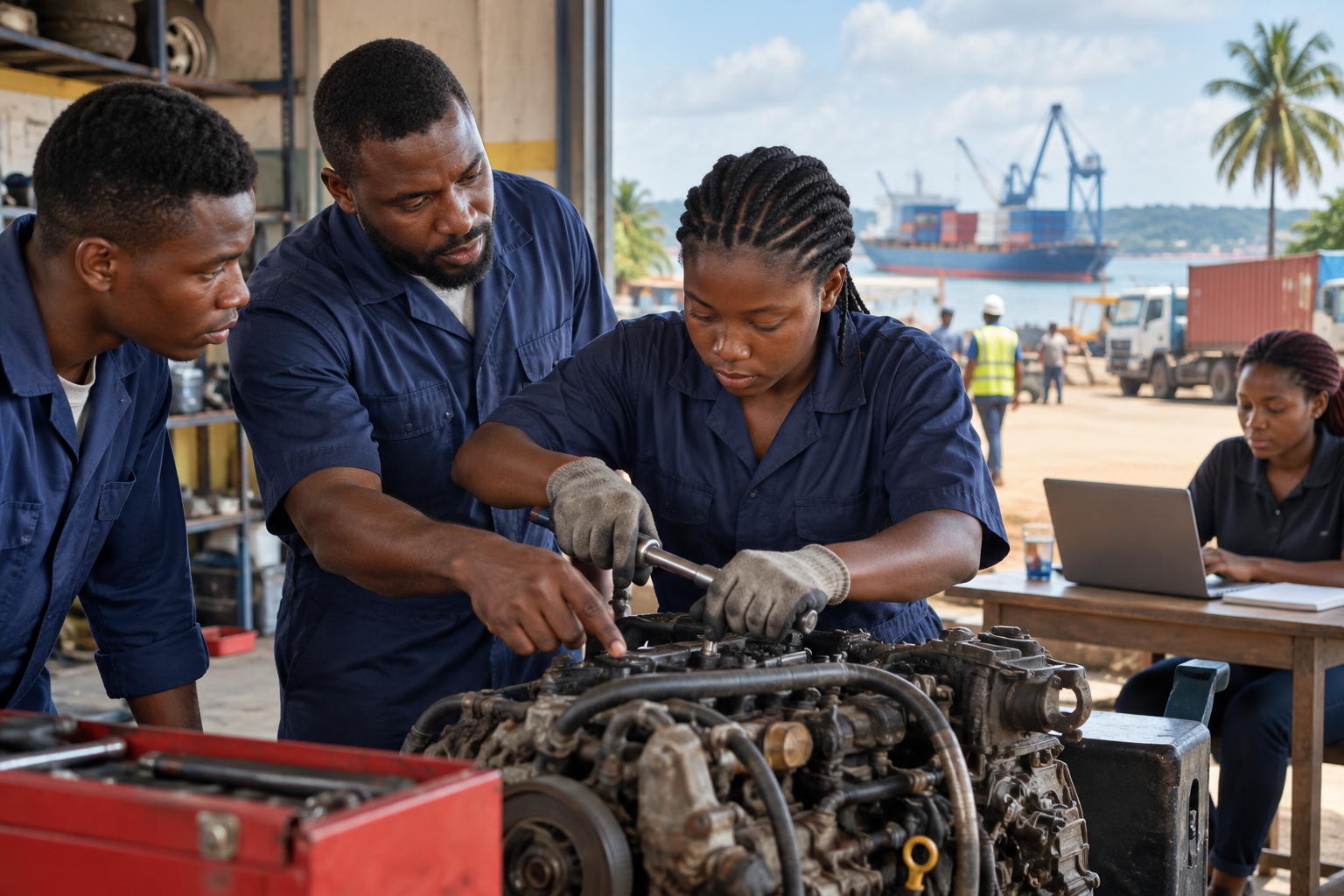
Training Should Begin With the Work Employers Need
To bridge the skills gap, Liberia's training programs should be redesigned around specific, employer-defined tasks, transforming certificates into verifiable portfolios of competence that businesses can trust.
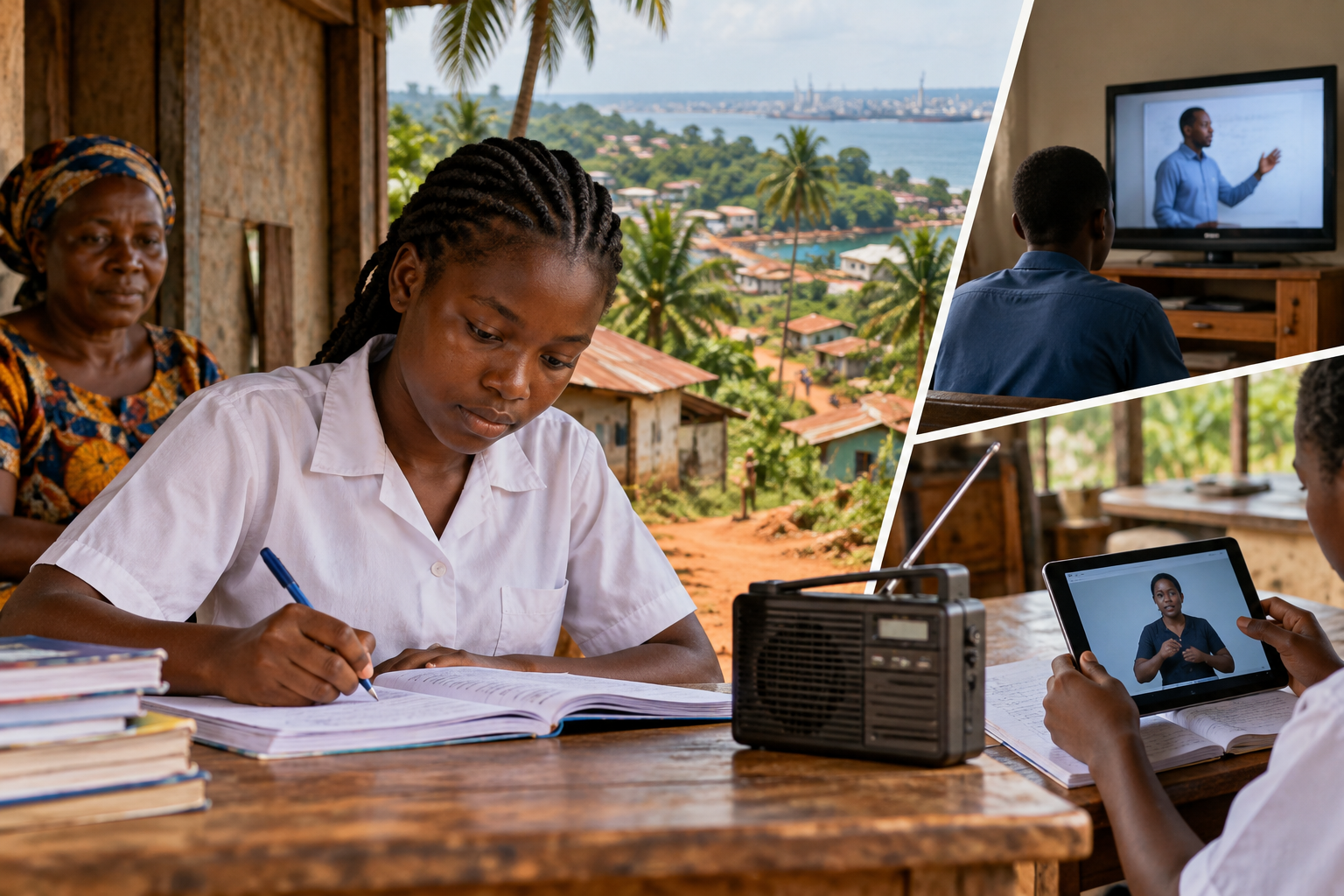
Digital Learning Must Account for Unequal Access
Ghana's pandemic response shows that effective digital education must be designed for unequal access, a lesson Liberia can apply by blending online, offline, and broadcast methods to ensure no student is left behind.

Young Professionals Need Evidence of Competence
To bridge the gap between academic credentials and employer needs, Liberia should adopt portfolio-based assessments where young professionals produce vetted, real-world work as tangible evidence of their competence.