
Technology Projects Should Demonstrate Public Value
Instead of simply launching more digital platforms, Liberia can learn from regional examples to adopt a disciplined, evidence-based approach that ensures technology projects deliver real and sustainable public value.

Editorial analysis. This piece reflects Executive Tea Chronicle's interpretation and editorial mission, not an official government position.
Analysis. Drafted from cited World Bank sources for editor review; Liberia proposals are the magazine's analysis, not source findings.
Source scope: the cited sources describe historical project designs and financing announcements (2021–2024), not verified current implementation outcomes. No new Liberia-specific factual evidence was checked for this draft; Liberia scenarios are hypothetical.
The phrase “digital transformation” suggests a promise of efficiency, transparency, and accelerated economic growth for any nation. A common approach is to view the launch of new government websites and digital platforms as tangible proof of progress, but this risks confusing activity with achievement. A critical question for Liberia’s development is not how many systems can be built, but which specific investments will deliver measurable, useful, and sustainable outcomes for its citizens and businesses.
Answering this question requires a focus on public value. Frameworks for such an evaluation can be informed by development programs elsewhere. For example, World Bank-supported programs announced in other African nations between 2021 and 2024, while not blueprints to be copied, offer a lens for refining strategy. Their designs often treat technology as one part of an integrated ecosystem, linking infrastructure, human capability, and economic goals in a way that prioritizes real-world impact over digital novelties.
By studying the design of such initiatives, Liberia can inform its own move toward a more disciplined and evidence-based approach. The goal is to ensure that investments in technology are tied to clear, verifiable improvements in the lives of the people they are meant to serve.
What the comparison shows
A review of several large-scale digital projects announced in the region between 2021 and 2024 reveals a consistent pattern in their design. They were structured not as simple IT procurement exercises, but as comprehensive development programs where technology is a tool, not the sole objective. The common thread is an integrated investment in infrastructure, human skills, and targeted economic sectors.
For example, a World Bank press release from November 2021 described a $100 million project approved for Rwanda. Its design aimed to connect infrastructure investments directly to user capacity and services. The plan included developing at least 30 new or upgraded digital services and supporting the issuance of new digital ID credentials to 75 percent of the population. Crucially, it paired these goals with initiatives to help 250,000 households with financing for smart devices and to train three million people in basic digital literacy, with targets for women and girls. Similarly, a $200 million project for Ghana, announced in an April 2022 press release, was designed to increase access to mobile internet and broadband services for six million people while simultaneously strengthening the digital startup ecosystem and facilitating data-driven digital agriculture.
This holistic approach is also evident in other announced programs. In April 2023, the World Bank announced its approval of the first $390 million phase of a program in Kenya. The stated objective was to expand high-speed internet to over 70 percent of the population in rural and underserved areas, directly linking this infrastructure push to improving education and building a competitive labor force through digital skills development. In Burkina Faso, a January 2024 press release detailed a $150 million project designed to increase broadband access, with a focus on vulnerable groups including internally displaced persons and rural communities. This connectivity goal was explicitly tied to developing digital public services in sectors like health and education and providing digital skills training for public administration staff and young people.
In each case, these announced project designs treat connectivity, digital literacy, and service delivery as inseparable components of a single strategy. They aim to address the entire value chain, from infrastructure to a person’s ability to use a service. It is important to note that these are project financing announcements and stated objectives, not evaluations of delivered results. Their value for analysis lies in the shared logic of their design: that a digital transformation strategy can be built on a foundation of both capable infrastructure and capable users.
Analysis: applying the lesson in Liberia
To apply this integrated logic in Liberia, government agencies could consider a structured methodology before committing to new large-scale technology projects. Such a process could begin with establishing a clear benchmark for success.
First, for any service being considered for digitization—for example, a hypothetical process for business registration or obtaining permits—an agency would need to perform a baseline assessment. This would involve documenting the time and cost currently required for different types of users to complete the process. This documentation creates a concrete metric against which any proposed digital solution can be judged.
Second, a common best practice is to mandate a limited, time-bound pilot program before a full-scale rollout. The purpose of the pilot is to test the proposed tool with a representative sample of its intended audience. In a hypothetical example, a pilot for a new digital customs portal might involve importers of different sizes and in different locations. The test would determine whether users can access the system with available devices and networks, or if barriers like data costs or limited digital literacy would impede adoption. The results—such as time saved or costs reduced—could then be measured against the original baseline.
This process helps ensure that user needs drive the design. For example, a digital platform may have limited public value if it is not available in languages spoken by its users, requires a level of connectivity that is not widely available, or is not designed for users with disabilities. Such a tool risks deepening the very inequalities it should be helping to solve.
Tradeoffs and implementation risks
Adopting a disciplined approach requires acknowledging significant tradeoffs and implementation risks. A primary concern for any digital project is sustainability. A platform funded by a one-time grant can become a long-term liability if there is no budget or local expertise for its maintenance, security, and upgrades. The design of the reviewed regional projects suggests that funding for skills development for public servants and local technicians is as important as the initial software development. A smaller system that works reliably and can be maintained locally may create more economic value than an ambitious project without a credible long-term operating model.
Furthermore, any digital strategy must account for existing infrastructure. The utility of a government application, for instance, is dependent on the availability of affordable, reliable electricity and internet connectivity. The announced project designs for Ghana and Kenya included plans to attract private capital to extend last-mile connectivity. This suggests an effective strategy may need to address infrastructure and applications in parallel, not sequentially. Finally, there is the risk of digital exclusion. In a hypothetical scenario, if a critical service like obtaining a birth certificate were to move entirely online, it could disenfranchise citizens without reliable access to smartphones or the internet. Any digital transition plan would need to consider maintaining accessible, non-digital service channels to ensure no one is left behind.
What global competence looks like here
Learning from international examples does not mean uncritically copying another country’s model. It can mean adopting a proven methodology and applying it to a unique local context. In this case, it means embracing the discipline of evidence-based policymaking that appears to underpin the reviewed digital development programs.
An evidence-based approach means being willing to change direction. If a pilot program reveals that a proposed system is too complex for most users or that its maintenance costs are unsustainable, a sound decision could be to pause, redesign, or even cancel the project. Proceeding with a flawed plan can lead to wasted resources and undermine public trust. Instead, the focus can be on building systems that are, first and foremost, useful and accessible to their intended users, thereby demonstrating a clear return on public investment.
Bottom line
Digital transformation holds potential for Liberia, but it is a tool, not a panacea. The goal should not be to accumulate a portfolio of technology projects, but to make measurable improvements in public service delivery and economic opportunity. An effective path forward could be one of deliberate, incremental steps. By establishing clear baselines, running user-focused pilots, and planning for long-term sustainability, it becomes possible to ensure that investments in technology build a more efficient and equitable future. A modest system that reliably works for its intended users can create more public value than an ambitious project that is ultimately inaccessible or fails to launch.
Sources
- World Bank Provides $100 Million to Accelerate Rwanda’s Digital Transformation — World Bank, published 2021-12-01; event 2021-11-30
- World Bank Provides $200 Million to Accelerate Ghana’s Digital Transformation Agenda for Better Jobs — World Bank, published 2022-04-28
- Kenya and the World Bank Group Provide a $390 Million Boost the Digital Economy — World Bank, published 2023-04-05
- Burkina Faso: Scaled-up Support for Digital Transformation — World Bank, published 2024-01-23
Related reading

Investor Confidence Begins With Verifiable Information
To attract serious capital, Liberia must make its investment process more transparent; a public portal with verifiable project data, inspired by Rwanda's digital agenda, could be the key to building investor confidence.
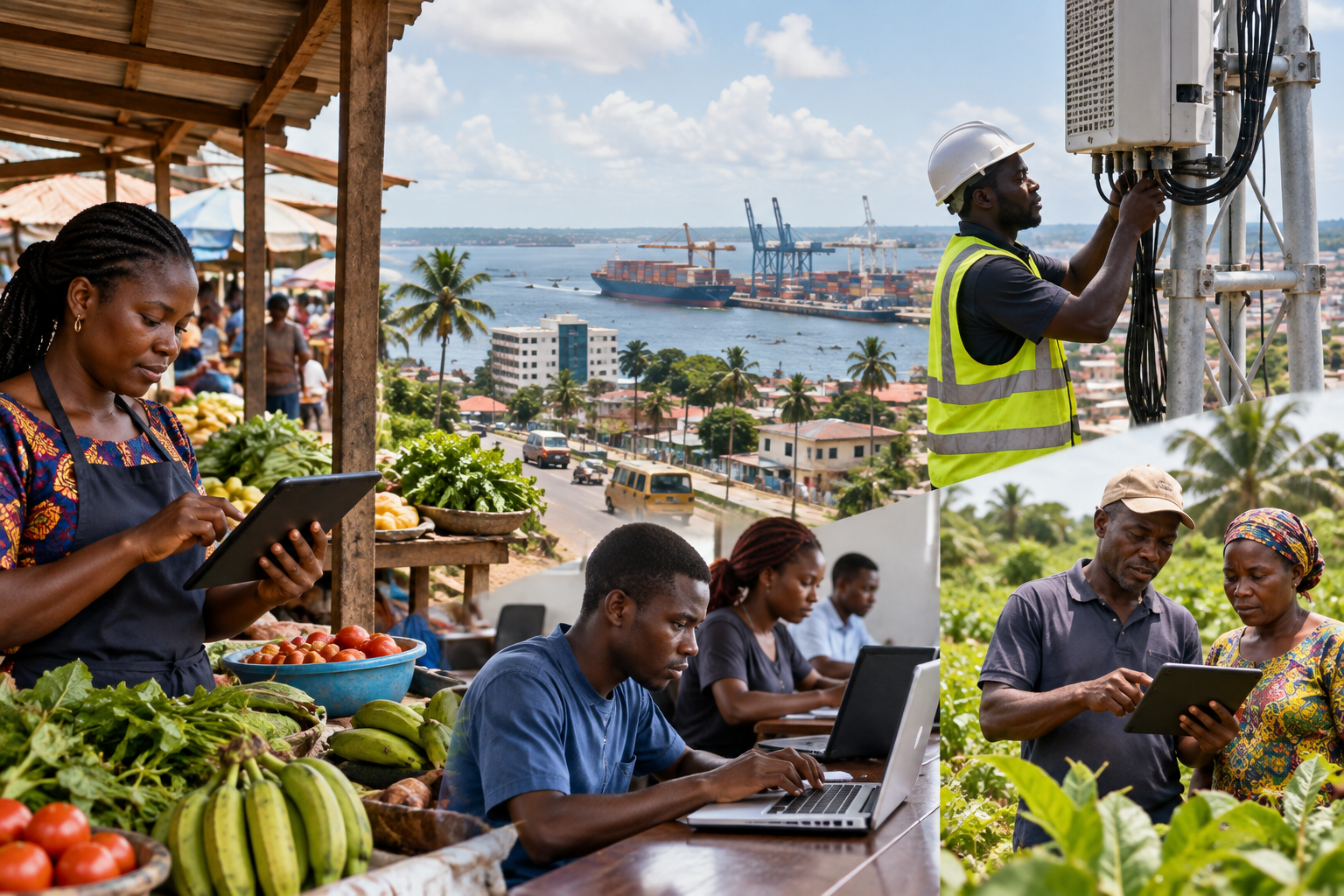
Broadband Should Be Evaluated as Economic Infrastructure
To unlock durable growth, Liberia must evaluate broadband not as a consumer utility but as strategic economic infrastructure, prioritizing productive hubs and measurable business outcomes based on regional models.
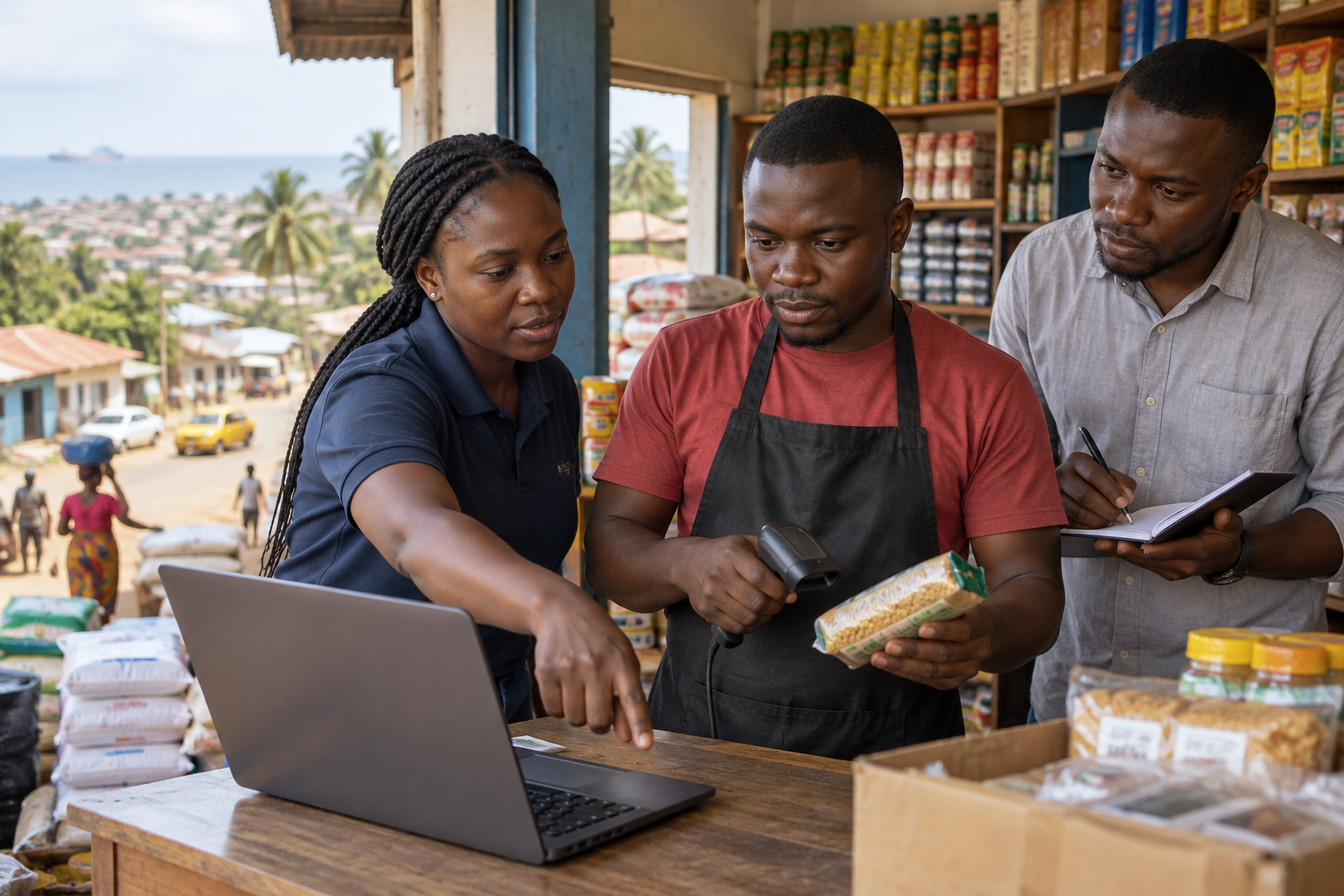
Small Businesses Need Technology They Can Afford to Maintain
Supporting Liberia's small businesses requires more than just software; it demands an integrated approach that pairs affordable technology with financial access and hands-on training to solve real operational problems.