
Broadband Should Be Evaluated as Economic Infrastructure
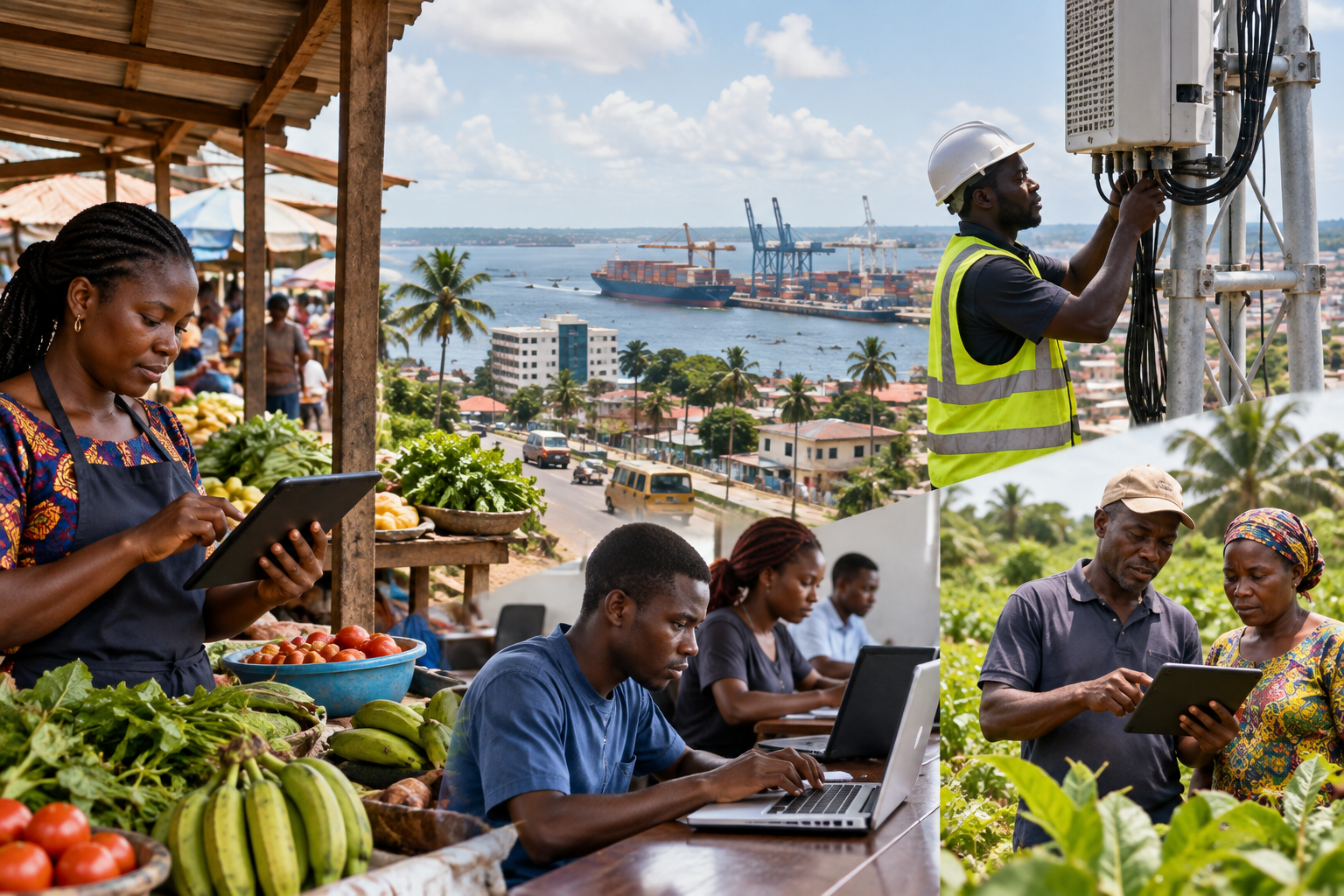
To unlock durable growth, Liberia must evaluate broadband not as a consumer utility but as strategic economic infrastructure, prioritizing productive hubs and measurable business outcomes based on regional models.
Editorial analysis. This piece reflects Executive Tea Chronicle's interpretation and editorial mission, not an official government position.
Analysis. Drafted from cited World Bank sources for editor review; Liberia proposals are the magazine's analysis, not source findings.
Source scope: the cited sources describe historical project designs and financing announcements (2021–2024), not verified current implementation outcomes. No new Liberia-specific factual evidence was checked for this draft; Liberia scenarios are hypothetical.
An internet connection is not an end in itself. Its economic value emerges when it is used to complete useful work, access better services, or create new value. Digital development strategies can sometimes focus heavily on simple access, such as whether a signal is present in a given area. To foster deeper economic development, however, it may be necessary to evaluate broadband as other core economic infrastructure, like ports and highways: by its capacity to support productive, reliable, and competitive commercial activity.
Some international approaches are already moving in this direction. A 2022 project design in Ghana, for example, illustrates a more strategic framework. While any national project involves unique local factors, its design philosophy offers a model for what a business-focused digital strategy could look like. The goal is not just to connect people, but to connect them to tangible economic opportunities and more efficient public services, creating a foundation for job creation and private-sector growth.
What the comparison shows
In April 2022, the World Bank announced its approval of $200 million for the Ghana Digital Acceleration Project. According to the announcement, the project’s design aimed to build an economic ecosystem. Stated objectives included increasing internet access for six million people by encouraging private sector investment in last-mile connectivity in underserved rural areas. This approach positions private providers as partners in a national strategy.
Critically, the project’s stated goals were tied to specific economic sectors. The World Bank announcement noted that the design was intended to facilitate smallholder engagement in data-driven digital agriculture and strengthen the local digital innovation ecosystem to improve the survival and growth rate of tech-enabled startups. Further, it planned to build on a previous project, e-Transform Ghana, by enhancing the efficiency and quality of selected digital public services. A World Bank official noted at the time that the project was framed as helping to drive a robust post-COVID-19 recovery, linking digital infrastructure directly to economy-wide performance.
Analysis: applying the lesson in Liberia
This strategic, sector-focused approach offers a potential lesson. Rather than focusing only on geographically uniform rollouts, an alternative strategy could prioritize investments that create zones of high-quality, reliable, and affordable connectivity around key economic nodes. A national analysis could identify potential locations, such as commercial districts, agricultural trading hubs, vocational centers, and transport nexuses.
The objective would be to create a critical mass of digital capacity where it can be most productively used. In a hypothetical scenario, a range of economic activities could be enhanced:
- A wholesaler could use reliable, high-speed internet to manage inventory in real time, place orders with suppliers, and receive digital payments from retailers, potentially improving efficiency.
- An agricultural cooperative could access market price data, participate in online agricultural extension training, and use digital platforms to sell produce to large buyers, which could increase their bargaining power.
- A student at a vocational school could potentially complete online certification courses, making them more competitive for jobs in a modern economy.
Public support for network expansion could be conditioned on achieving such outcomes. Any policy incentives for private telecommunication firms could come with transparent and enforceable service level agreements, including guaranteed speeds, uptime, and clear commitments on coverage for specific, economically vital areas.
Tradeoffs and implementation risks
Of course, a digital infrastructure strategy cannot exist in a vacuum. For example, a fiber optic cable leading to a facility without reliable power represents a potential misallocation of investment. A primary risk in any digital program is focusing on connectivity while ignoring the enabling environment. A fast connection offers limited benefits if electrical power is inconsistent or if subscription costs are prohibitive for small businesses.
Therefore, a digital strategy would need to be cross-sectoral, integrating with planning for energy infrastructure and policies for financial inclusion. Furthermore, public support for private sector network build-outs would need to be tied to performance. This would require establishing an independent capacity to test and verify service quality. For instance, if public incentives are provided to serve a specific economic zone, accountability mechanisms would be needed to ensure that service quality meets agreed-upon standards, such as consistent bandwidth during business hours.
What global competence looks like here
The ultimate goal of such a strategy would be to build an infrastructure platform that supports the competitiveness of local firms. In the 21st century, much of international trade, investment, and innovation relies on digital connectivity. For example, reliable digital infrastructure can enable an exporter to communicate with an overseas buyer, a logistics company to use global tracking platforms, or a startup to process international payments.
Building this competence would require a shift in how success is measured. Useful metrics could move beyond tracking simple user numbers to measuring economic utility. Examples of such metrics could include the rate of digital service adoption by businesses, average internet uptime in commercial districts, the cost and time required to complete a digital transaction, and the number of firms using connectivity for core functions like accounting, logistics, and marketing. This type of data would provide a clearer picture of whether digital infrastructure is serving the economy.
Bottom line
Treating broadband as essential economic infrastructure means being strategic, targeted, and performance-oriented. It means prioritizing investments that empower producers, traders, and innovators. It means understanding that connectivity is a means to an end: a more dynamic, resilient, and competitive economy. By analyzing international project designs, such as the one announced for Ghana, and adapting lessons to a local economic context, investments in digital infrastructure can be better positioned to yield economic dividends.
Sources
- World Bank Provides $200 Million to Accelerate Ghana’s Digital Transformation Agenda for Better Jobs — World Bank, published 2022-04-28
Related reading

Investor Confidence Begins With Verifiable Information
To attract serious capital, Liberia must make its investment process more transparent; a public portal with verifiable project data, inspired by Rwanda's digital agenda, could be the key to building investor confidence.
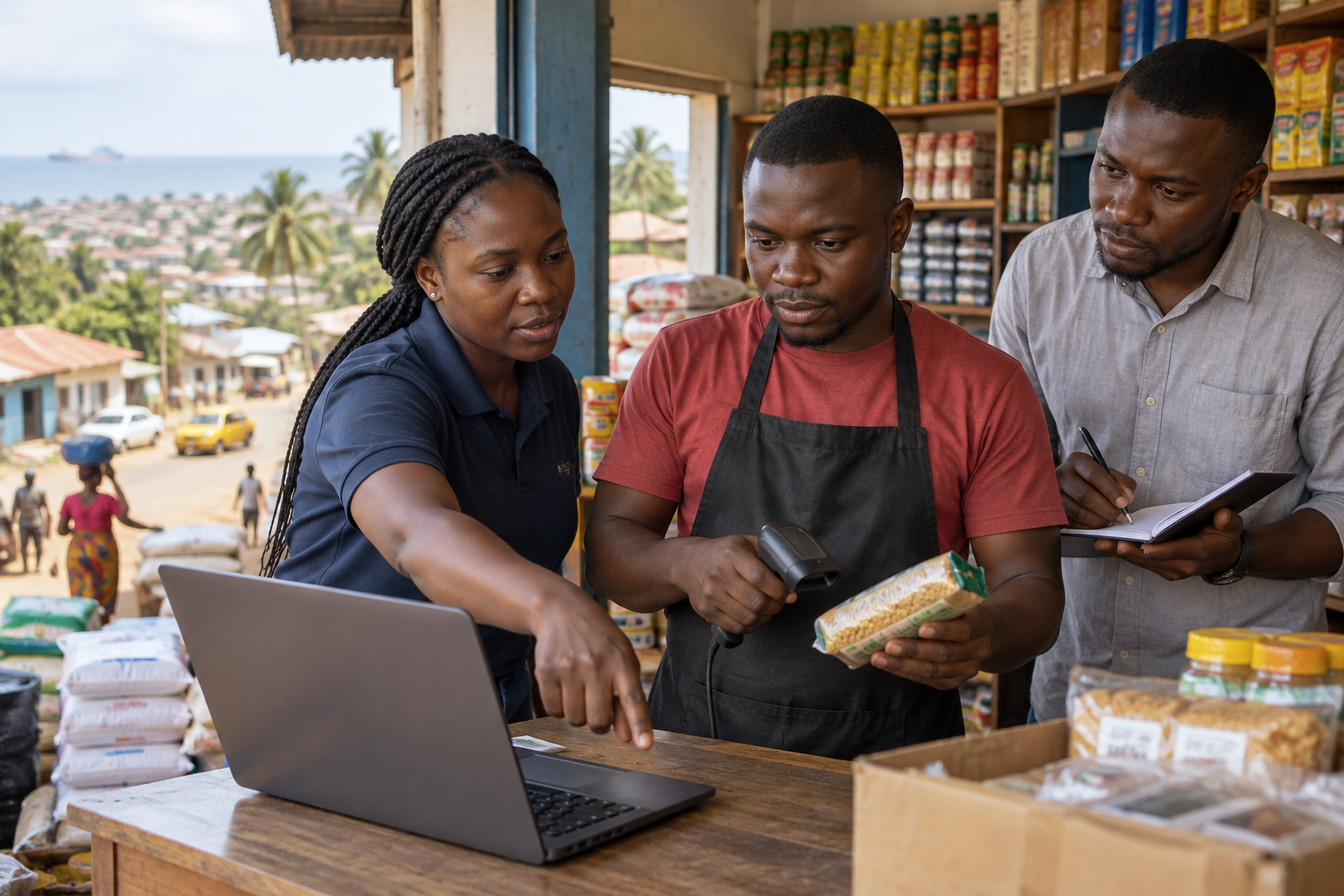
Small Businesses Need Technology They Can Afford to Maintain
Supporting Liberia's small businesses requires more than just software; it demands an integrated approach that pairs affordable technology with financial access and hands-on training to solve real operational problems.

Digital Finance Must Solve a Commercial Problem
Kenya’s integrated digital strategy shows that for Liberia, the true test of financial technology is not just access, but whether it solves real-world commercial problems for businesses, reducing friction and increasing reliability.