
The Diaspora Can Contribute More Than Capital
Beyond remittances, Liberia can structure a program for its diaspora to transfer professional skills, turning global expertise into local institutional knowledge and measurable business improvements.

Editorial analysis. This piece reflects Executive Tea Chronicle's interpretation and editorial mission, not an official government position.
Analysis. Drafted from cited World Bank sources for editor review; Liberia proposals are the magazine's analysis, not source findings.
Source scope: the cited sources describe historical project designs and financing announcements (2021–2024), not verified current implementation outcomes. No new Liberia-specific factual evidence was checked for this draft; Liberia scenarios are hypothetical.
The diaspora is often viewed as an economic contributor, primarily through the lens of remittances. While such financial flows can be a source of foreign currency, a focus on capital alone may overlook another potential asset: the professional expertise of citizens living abroad. Experience in fields like engineering, finance, logistics, technology, and management could represent a source of knowledge applicable to challenges within the Liberian economy.
A common challenge is how to channel such expertise effectively. Informal knowledge sharing can be valuable but may have limited scale. Leveraging this resource for broader economic development could involve moving toward a more structured system of knowledge transfer. This would require a framework that connects diaspora professionals with specific, well-defined needs within local businesses and institutions, creating a mechanism for global competence to translate into local capacity.
What the comparison shows
The strategic value of pairing infrastructure with human skills is a principle evident in development projects elsewhere. In Kenya, for example, a national strategy aims to position the country as a regional hub for information and communication technology. According to a World Bank press release from April 5, 2023, the institution approved $390 million for the first phase of the Kenya Digital Economy Acceleration Project. The project’s design illustrates a comprehensive approach. It aims not only to expand the fiber optic backbone and increase high-speed internet access for the more than 70% of the population in rural and underserved areas, but also to explicitly build skills for the regional digital economy.
The World Bank announcement notes that the project plans to improve the quality of education and aims to shrink disparities in digital skills. This suggests an understanding that infrastructure alone is not sufficient. For a digital economy to thrive, people and businesses must have the capabilities to use new technologies productively. The Kenyan initiative, as designed, seeks to support the development of a competitive labor force and enhance access to regional and global markets. A key insight from this model is the linkage: investment in physical assets may be most powerful when coupled with direct investment in the human knowledge needed to operate and innovate with them.
Analysis: applying the lesson in Liberia
Liberia could consider adapting this principle by establishing a formal program for diaspora professionals. Such a program would complement capital investment initiatives by focusing on matching the operational needs of local enterprises with the skills of Liberians abroad. The model could be grounded in practical, task-oriented collaboration rather than abstract mentorship.
For instance, one could envision a secure online platform, perhaps managed by a hypothetical partnership between a business association and a technical body. On this platform, a Liberian business could post a discrete, well-defined assignment.
- A hypothetical example could be a wholesaler in Gbarnga that needs an experienced accountant to review its financial reporting system and develop templates for a potential lender.
- In another scenario, a small juice processor in Nimba County could request a food scientist from the diaspora to review its production line for efficiency and safety, delivering a documented set of recommendations.
- A technology startup in Monrovia might need a diaspora software architect to review its development plan for scalability, providing several hours of virtual consultation to the local implementation team.
Tradeoffs and implementation risks
Such a program would not be without challenges. A primary risk is scope creep, where a well-defined task expands into a vague, ongoing commitment, leading to frustration for both the volunteer and the business. This can be mitigated by rigorous project definition at the outset, with a third-party facilitator helping the local business frame a realistic and achievable request.
Another risk is a mismatch between an expert’s skills and the local context. A professional accustomed to a resource-rich environment may offer advice that is not easily adaptable to the recipient firm’s operating conditions. The matching process would therefore need to include a thorough briefing on local conditions, and diaspora participants would need to approach assignments with a willingness to adapt.
Finally, there is the risk of poor adoption. Knowledge transfer may fail if recommendations are not successfully integrated by the enterprise. The program’s design could mandate that knowledge transfer itself is a key deliverable, with the diaspora expert’s role including guidance for the local team on how to use a new system or apply a new process to support sustainability.
What global competence looks like here
Successfully implementing such a model could help redefine global competence not as an abstract quality, but as a tangible asset being actively integrated into the economy. For example, if a project manager at a Liberian firm learns a new scheduling technique from a diaspora counterpart, that firm's ability to execute complex projects may improve. If a local firm adopts more robust accounting practices, its ability to attract investment could grow.
The value of such a program would likely not be in the number of professionals who sign up, but in the number of assignments successfully completed and the tangible improvements they generate. Success could be measured by outcomes at the organizational level: for instance, a clinic with a more efficient inventory management system, a construction firm with an improved safety protocol, or an agricultural cooperative with a more effective export strategy developed through this collaborative channel.
Bottom line
Remittances are an important component of the diaspora’s economic contribution. A complementary pillar could be built on professional partnership. By creating a structured and results-oriented framework for skills transfer, it may be possible to better harness the full spectrum of global talent available. This would represent a shift toward active collaboration focused on building local capacity. The emphasis would move from a singular focus on financial flows to a dual approach that also systematically engages professional expertise for national development.
Sources
- Kenya and the World Bank Group Provide a $390 Million Boost the Digital Economy — World Bank, published 2023-04-05
Related reading

Investor Confidence Begins With Verifiable Information
To attract serious capital, Liberia must make its investment process more transparent; a public portal with verifiable project data, inspired by Rwanda's digital agenda, could be the key to building investor confidence.
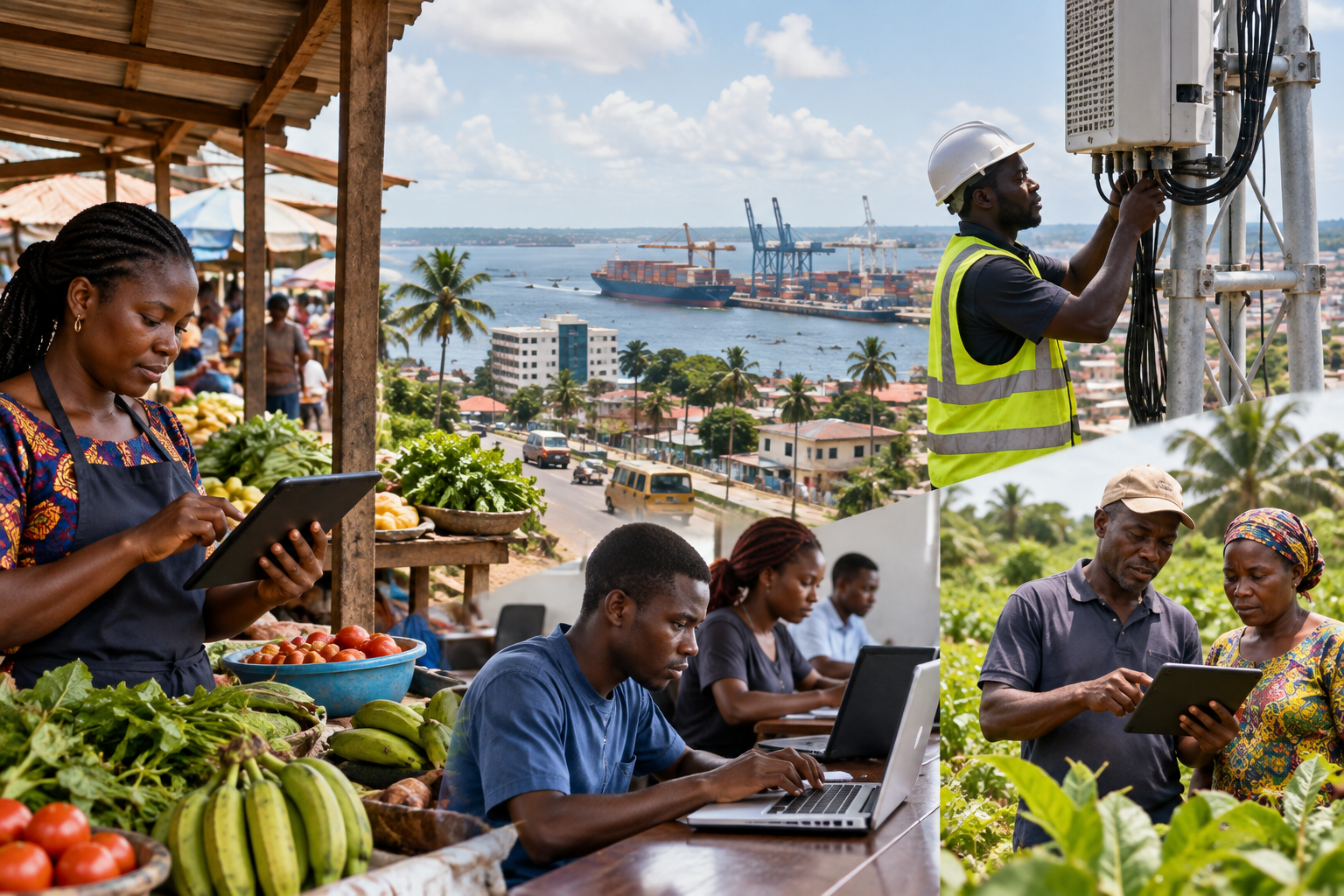
Broadband Should Be Evaluated as Economic Infrastructure
To unlock durable growth, Liberia must evaluate broadband not as a consumer utility but as strategic economic infrastructure, prioritizing productive hubs and measurable business outcomes based on regional models.
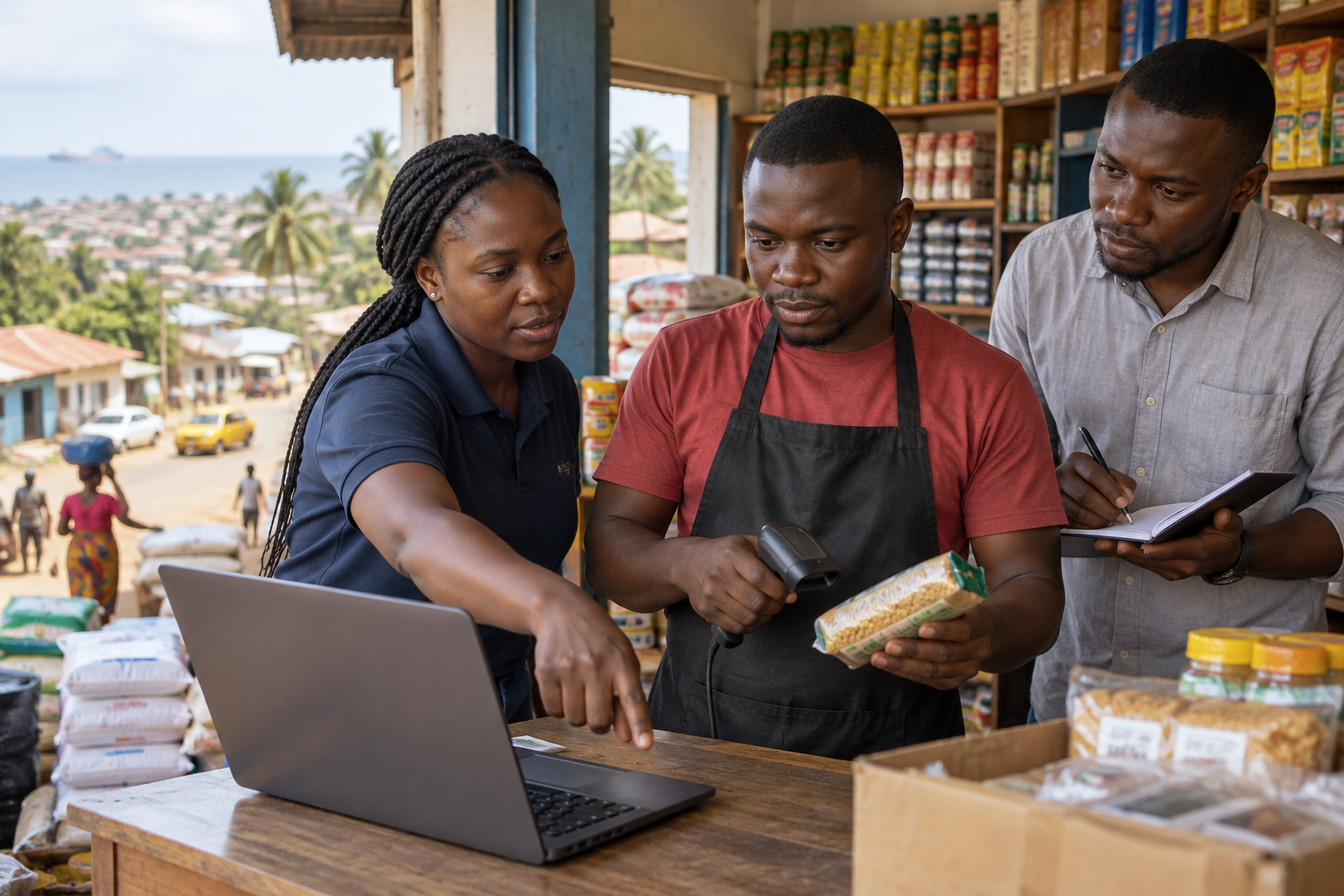
Small Businesses Need Technology They Can Afford to Maintain
Supporting Liberia's small businesses requires more than just software; it demands an integrated approach that pairs affordable technology with financial access and hands-on training to solve real operational problems.