
Digital Investment Needs a Maintenance Budget
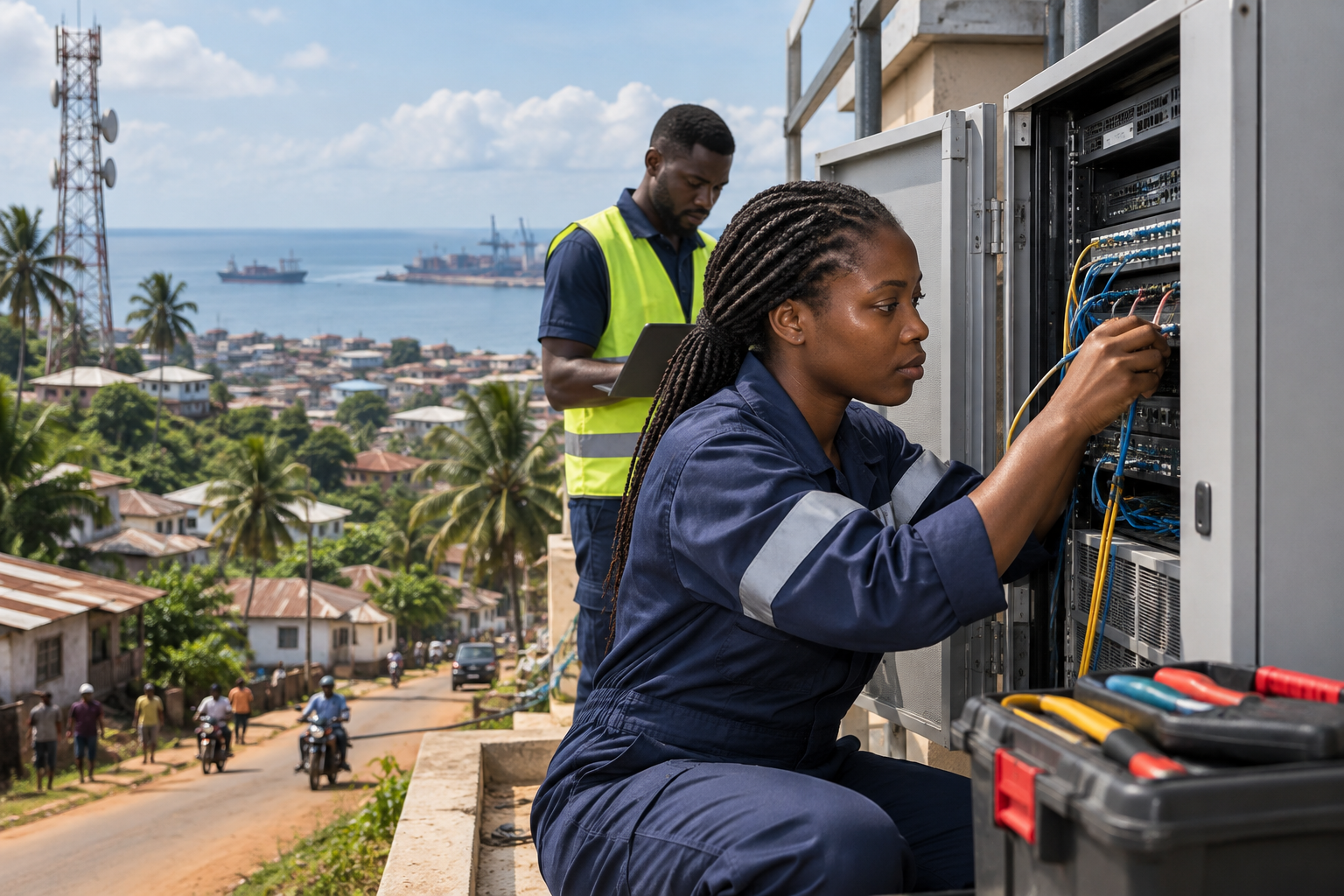
To ensure Liberia's digital investments are sustainable, public procurement must move beyond initial costs and mandate a realistic, public lifecycle budget for maintenance, staffing, and future replacement.
Editorial analysis. This piece reflects Executive Tea Chronicle's interpretation and editorial mission, not an official government position.
Analysis. Drafted from cited World Bank sources for editor review; Liberia proposals are the magazine's analysis, not source findings.
Source scope: the cited sources describe historical project designs and financing announcements (2021–2024), not verified current implementation outcomes. No new Liberia-specific factual evidence was checked for this draft; Liberia scenarios are hypothetical.
The drive for digital transformation across Africa can be a powerful engine for development, promising to unlock economic potential, streamline governance, and create new opportunities for citizens. Ambitious national projects are attracting significant international support, signaling a shared belief in a technologically empowered future. An investment in Ghana exemplifies this trend. According to a World Bank press release of April 28, 2022, the institution approved $200 million in financing to accelerate Ghana’s digital agenda.
The stated goals of this Ghana Digital Acceleration Project are comprehensive. The plan, announced in 2022, aims to increase access to mobile internet and broadband for six million people, improve the quality of selected digital public services, and cultivate a stronger digital innovation ecosystem to foster job creation. The project design specifically targets rural and underserved areas, aiming to close the digital gap and promote inclusion for women and persons with disabilities. It builds on previous work, such as the e-Transform Ghana project, and seeks to deliver benefits like greater government efficiency.
Yet the scale of such investments highlights a critical, often overlooked, aspect of public procurement: what happens after the initial deployment? The launch of a project, the installation of new servers, and the rollout of new software can obscure the long-term commitment required to keep them running. This is where the challenge of sustainability lies. For a country like Liberia to build a resilient digital infrastructure, a focus on the total cost of ownership, not just the initial purchase price, is essential. Every digital investment needs a maintenance budget.
What the comparison shows
The World Bank’s support for Ghana provides a useful template of modern development finance. The project is designed not just as a technology purchase but as a comprehensive intervention. The financing is intended to support regulatory changes for a more inclusive environment, facilitate data-driven digital agriculture for smallholders, and strengthen support organizations for tech startups, as described in the 2022 press release. According to a 2020 diagnostic cited by the World Bank, Ghana is among the digital leaders in Sub-Saharan Africa, and the project aims to further enhance the efficiency of public service delivery.
This holistic design is a common feature of such programmes. However, public announcements from development partners typically focus on strategic objectives and intended impact, not the granular details of operational expenditure. The work of budgeting for software license renewals, hardware replacement cycles, and specialist support contracts is left to implementing government agencies. It is in these details that a promising project can falter, turning a one-time capital investment into a recurring, unfunded operational burden. Without a clear plan and budget for upkeep, new systems can risk degrading into obsolescence, failing to deliver their promised long-term value.
Analysis: applying the lesson in Liberia
Liberia has an opportunity to embed sustainability into its digital procurement process. One potential approach is to require that no public technology project be approved without a comprehensive and realistic Lifecycle Operating Plan. This document would be as critical to the evaluation as the initial bid price, forcing a clear-eyed assessment of the true, long-term cost of any new system.
Such a plan could have several core components:
- Recurring Fees: This includes annual software licenses, cloud hosting subscriptions, and other mandatory platform fees.
- Staffing and Training: The plan would need to identify the personnel required to operate and manage the system. What are their salary costs? What skills are needed, and what is the budget for training and retaining them?
- Connectivity: A digital service is only as good as its connection. The plan must budget for the reliable, high-speed internet necessary for the system to function as intended.
- Support and Maintenance: What is the cost of a technical support contract with the vendor? Could local technicians be trained to handle routine maintenance, or would every issue require an outside consultant?
- Data and Transition: The plan should ensure that the government retains ownership and control of its data. What are the costs and procedures for exporting all data if Liberia decides to switch to a different system in the future?
- Capital Replacement: Servers, laptops, and network switches have a finite lifespan, often three to five years. The plan must include a funded schedule for replacing aging hardware before it fails.
In a hypothetical example, a project to digitize land records in a county might have its initial software development funded by a donor. A Lifecycle Operating Plan would force planners to ask: Who pays the server bill in year two? Who trains new clerks when there is staff turnover? What happens when custom-built software is no longer compatible with new web browsers? In a hypothetical port-service example, if a proposed online tariff calculator is implemented, a business owner would need it to be functional and accurate in year five, not just in year one.
Tradeoffs and implementation risks
Mandating this level of foresight is not without challenges. It will almost certainly make projects appear more expensive on paper, which can be difficult to justify. For example, a project with an illustrative $1 million upfront cost but a $300,000 annual operating burden is a far greater long-term liability than a project costing an illustrative $1.5 million upfront with a $50,000 annual cost. Procurement processes can sometimes incentivize choosing the lowest initial bid price.
Furthermore, evaluating these long-term plans requires a high degree of technical and financial competence within procurement teams. A common risk in digital programmes is that implementing agencies might submit overly optimistic, underestimated operating budgets just to secure project approval. Vendors may also resist, preferring to obscure long-term costs to win bids with deceptively low initial prices. Overcoming this would require building robust, independent evaluation capacity within the civil service.
What global competence looks like here
Adopting this approach is not about creating bureaucracy; it is about demonstrating competence and becoming a more sophisticated partner in the global economy. A government that rigorously plans for the full lifecycle of its investments is a government that respects its own resources and those of its development partners. It signals that a country is building for the long term and can be a reliable steward of capital.
This competence would need to reside within a country's procurement and finance bodies. Staff would need to be able to analyze not just the sticker price but the entire ecosystem of costs a new technology brings with it. They would need to be empowered to challenge vendor proposals that rely on proprietary lock-in and to negotiate contracts that ensure data sovereignty and prioritize training for local technicians. This is a key literacy of modern economic governance.
Bottom line
The promise of digital transformation for Liberia is significant. From agriculture to education to public administration, technology can be a powerful catalyst for growth and transparency. However, to realize that promise, it is crucial that any digital infrastructure is built to last. By requiring a public, detailed, and realistic maintenance and operating budget for every new technology project, Liberia could safeguard its investments, prevent today’s solutions from becoming tomorrow’s fiscal drains, and build a digital future that is truly sustainable.
Sources
- World Bank Provides $200 Million to Accelerate Ghana’s Digital Transformation Agenda for Better Jobs — World Bank, published 2022-04-28
Related reading

Investor Confidence Begins With Verifiable Information
To attract serious capital, Liberia must make its investment process more transparent; a public portal with verifiable project data, inspired by Rwanda's digital agenda, could be the key to building investor confidence.
Broadband Should Be Evaluated as Economic Infrastructure
To unlock durable growth, Liberia must evaluate broadband not as a consumer utility but as strategic economic infrastructure, prioritizing productive hubs and measurable business outcomes based on regional models.
Small Businesses Need Technology They Can Afford to Maintain
Supporting Liberia's small businesses requires more than just software; it demands an integrated approach that pairs affordable technology with financial access and hands-on training to solve real operational problems.