
Global Competence Should Be Assessed Through Collaboration
To build true global competence, Liberia should move beyond sending professionals to international events and instead assess them on collaborative, cross-border projects that solve real-world problems.

Editorial analysis. This piece reflects Executive Tea Chronicle's interpretation and editorial mission, not an official government position.
Analysis. Drafted from cited World Bank sources for editor review; Liberia proposals are the magazine's analysis, not source findings.
Source scope: the cited sources describe historical project designs and financing announcements (2021–2024), not verified current implementation outcomes. No new Liberia-specific factual evidence was checked for this draft; Liberia scenarios are hypothetical.
Participation in international conferences and workshops is a common component of professional development. A potential pitfall, however, is treating attendance as a final measure of competence, rather than as one part of a larger process of building practical skills. While such exposure can be valuable, it is distinct from the demonstrated ability to collaborate with international counterparts to diagnose a problem, design a solution, and deliver a tangible result.
The ultimate test of competence is effective work. As investment flows into the foundational pillars of modern economies in the region, it presents an opportunity for any nation to consider how it builds and measures professional capacity. An alternative approach could shift the focus from learning about global best practices to demonstrating the ability to implement them with global partners. This represents a potential shift in emphasis from valuing attendance to valuing collaborative output.
A review of development projects in Africa can reveal models for building tangible capabilities. The structured, results-oriented thinking behind these projects can inform a more robust model for professional development, where competence is forged through partnership and assessed on performance.
What the comparison shows
World Bank-supported projects in several African nations highlight a shared focus on creating functional digital ecosystems through targeted, multi-faceted investment. These project designs provide a useful benchmark for what building modern economic capacity can entail.
For example, a project for Rwanda, for which the World Bank approved financing in 2021, was designed to accelerate the country’s digital transformation. According to a World Bank press release, its goals included helping 250,000 households finance smart devices, training three million people in basic digital literacy, and supporting at least 300 digital start-ups, with an emphasis on those owned by women. In Ghana, a Digital Acceleration Project approved for financing in 2022 was designed to increase access to mobile internet and broadband for six million people, according to the Bank. The project's stated aims include encouraging private sector investment in last-mile connectivity for underserved rural areas.
Similarly, a project in Kenya, for which financing was approved in 2023, is designed to expand high-speed internet to over 70% of the population in rural and underserved areas. As described in a World Bank release, its objectives include building skills for the regional digital economy and harmonizing policies with regional initiatives. In Burkina Faso, the focus is layered. A World Bank project appraisal document for the Entrepreneurship, Skills, and Technology Project described a plan to increase small and medium enterprises' access to finance and technology. A separate Digital Acceleration Project, for which the World Bank announced financing in 2024, was designed to expand digital connectivity and skills development, with a specific focus on vulnerable groups like internally displaced persons and rural communities.
Analysis: applying the lesson in Liberia
This integrated approach can be adapted into a model for developing human capital. A hypothetical pilot program could be designed to move beyond traditional training models and assess global competence through collaboration.
Consider a professional development program that assembles a small, cross-border team—for example, a public servant from one country, an entrepreneur from another, and an academic from a third. Their assignment would not be to attend a lecture, but to solve a practical problem with a clear deliverable. In a hypothetical example, the team could be tasked with developing a framework for a digital platform that helps smallholder farmers access market price information.
In such a scenario, collaboration could be technology-enabled, preserving a clear record of work. The team’s success would be measured on several fronts: the quality of their research into local conditions, the technical soundness of their proposal, and their project management skills. A local business owner from one country might contribute insights on logistics bottlenecks, which an academic teammate could model against regional trade data, while an entrepreneur on the team could prototype a user interface for a mobile application. The final output—a detailed feasibility study or a functional prototype—would be the primary evidence of competence.
Tradeoffs and implementation risks
This approach presents its own challenges. Administering such a program would be complex, requiring dedicated coordinators, expert mentors, and a reliable technological platform for collaboration. A transparent and merit-based selection process for participants would be critical for legitimacy and effectiveness.
Furthermore, managing international teams can present difficulties, including navigating different work cultures and resolving conflicts productively. A potential challenge in some contexts is that the digital infrastructure needed to enable such collaboration may itself be a development target. These risks are significant, but they are also part of the learning process. Overcoming them is, in itself, a demonstration of competence.
What global competence looks like here
Under such a model, a professional’s claim to global competence would not rest on certificates of participation alone. It would be backed by a portfolio of tangible work. This could be the ability to explain how specific local conditions influenced a team’s joint recommendation on a regional supply chain issue. It could be the demonstrated skill of co-authoring a technical brief with a colleague in another country or presenting a jointly developed business case to potential investors.
The strongest evidence of competence would be an output that international partners can use and a process they can understand and respect. This standard would demonstrate that participants are not just recipients of knowledge, but active co-creators of solutions. It is a more demanding standard, but one that could prepare professionals to operate on a global stage.
Bottom line
The investments being made in Rwanda, Ghana, Kenya, and Burkina Faso reflect an understanding that development is about building systems that work. For any country to thrive in this emerging landscape, adopting a similar results-oriented ethos in its approach to human capital development is a logical consideration. Moving from passive learning to active, assessed collaboration may be an effective way to build and prove national capacity.
The measure of global competence could be defined not by what professionals have been taught, but by what they can do. Creating opportunities to demonstrate this through structured, cross-border teamwork could help build a cadre of leaders, managers, and innovators prepared not just to participate in the global economy, but to contribute to it.
Sources
- World Bank Provides $100 Million to Accelerate Rwanda’s Digital Transformation — World Bank, published 2021-12-01; event 2021-11-30
- World Bank Provides $200 Million to Accelerate Ghana’s Digital Transformation Agenda for Better Jobs — World Bank, published 2022-04-28
- Burkina Faso - Entrepreneurship, Skills, and Technology Project (Project Appraisal Document, P177005) — World Bank, published 2023-04-17
- Kenya and the World Bank Group Provide a $390 Million Boost the Digital Economy — World Bank, published 2023-04-05
- Burkina Faso: Scaled-up Support for Digital Transformation — World Bank, published 2024-01-23
Related reading

Learn From Institutions Through Defined Assignments
To truly benefit from the experiences of peer nations like Rwanda, Liberian institutions must shift from general study tours to assignment-based exchanges focused on solving specific problems back home.
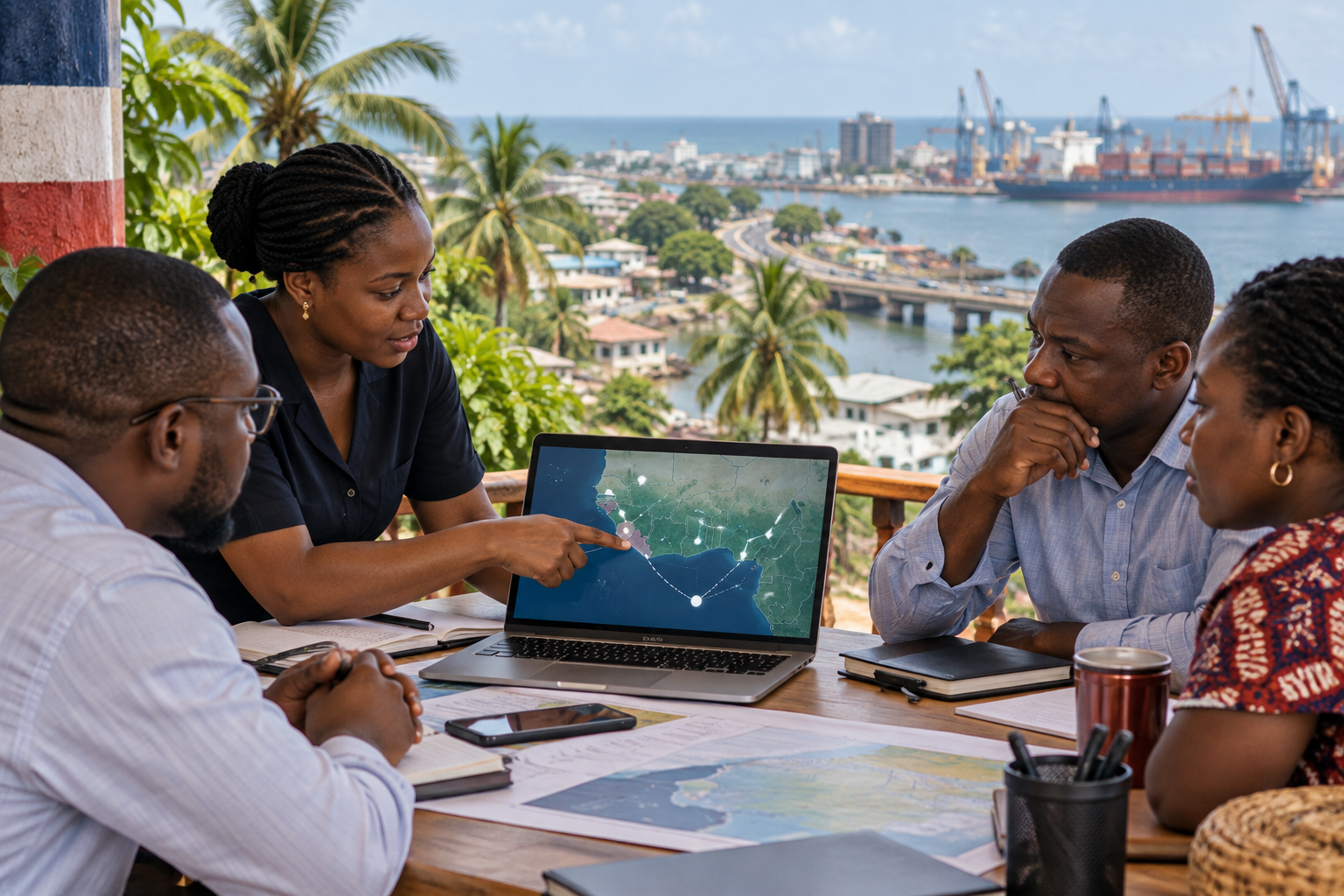
Regional Partnerships Need Compatible Technical Practices
To make regional partnerships work, Liberia can learn from Kenya's digital strategy by focusing on the practical, technical groundwork needed for dependable cross-border collaboration.
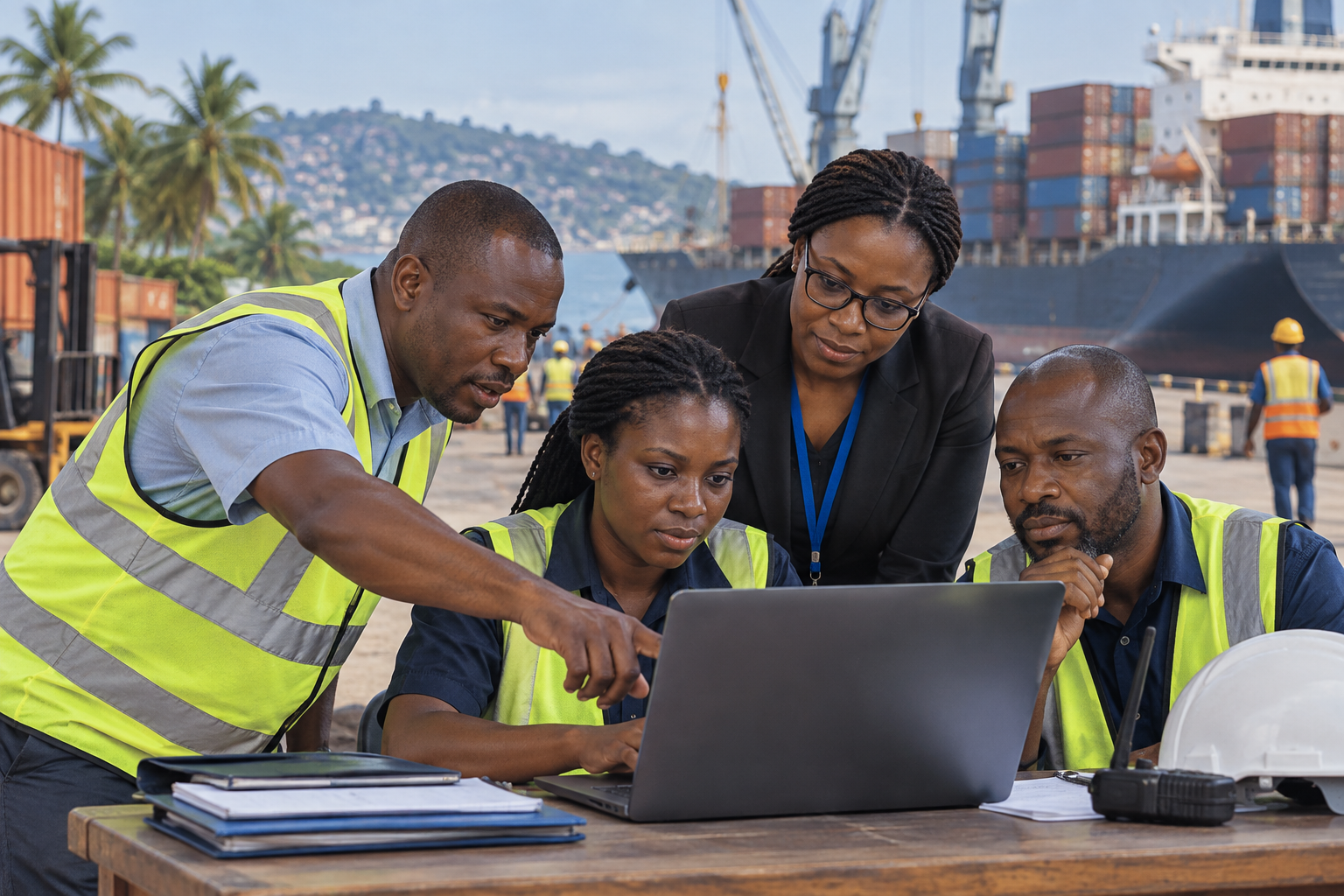
Partnership Agreements Should Include Knowledge Transfer
Inspired by Ghana's digital investment, Liberia must demand that development partnerships move beyond delivering systems to transferring the knowledge required for genuine, long-term ownership and sustainability.