
Public Dashboards Need Independent Verification
Inspired by digital transformation projects across Africa, Liberia must build public trust not just with data dashboards, but with systems for independent verification that make those dashboards credible.
Editorial analysis. This piece reflects Executive Tea Chronicle's interpretation and editorial mission, not an official government position.
Analysis. Drafted from cited World Bank sources for editor review; Liberia proposals are the magazine's analysis, not source findings.
Source scope: the cited sources describe historical project designs and financing announcements (2021–2024), not verified current implementation outcomes. No new Liberia-specific factual evidence was checked for this draft; Liberia scenarios are hypothetical.
As Liberia considers a course for a more efficient and responsive government, the concept of digital transformation is a powerful one. The idea of data-driven administration, with public-facing dashboards displaying progress on national projects, suggests a potential for enhanced transparency and accountability. Across the continent, some governments are pursuing this vision, backed by international support. This trend provides both potential models and cautionary lessons for any nation undertaking such a journey.
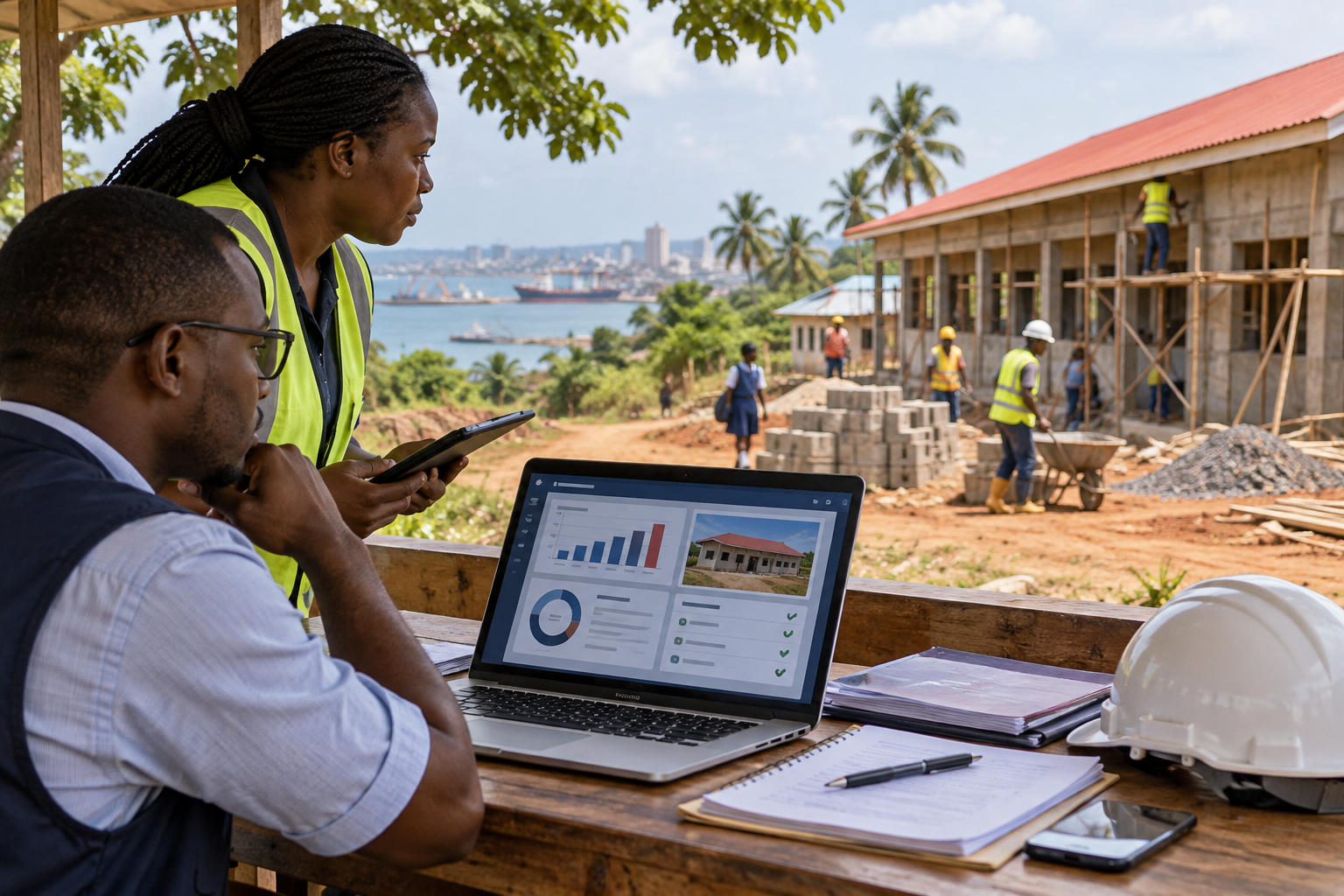
A critical lesson is that simply displaying data is not the same as building trust. An attractive chart showing a project is 90% complete may be of little value if the underlying data is unverified or outdated. For citizens, investors, and development partners to have confidence in a digital governance system, the information must be demonstrably credible. A key consideration for Liberia, should it invest in public dashboards, would be to engineer a back-end system of rigorous, independent verification. The goal would be not just to report progress, but to prove it.
What the comparison shows
The scale of digital ambition in the region is a clear indicator of its recognized potential. Between 2021 and 2024, the World Bank approved significant financing for projects aimed at transforming how some governments and economies operate. These initiatives, while tailored to each country, often share a focus on expanding connectivity and digitizing public services.
According to a World Bank press release from November 2021, a $100 million Digital Acceleration Project was approved for Rwanda. Its stated objectives included helping 250,000 households acquire smart devices, training three million people in basic digital literacy, and enrolling 75% of the population with new digital ID credentials. Similarly, a press release from April 2022 detailed a $200 million project for Ghana, intended to increase access to mobile internet and broadband services for six million people and enhance the efficiency of selected public services. For Kenya, an April 2023 announcement from the World Bank described a $390 million first-phase project aiming to boost broadband network coverage for the more than 70% of the population residing in rural and underserved areas, with a stated national goal of digitizing 80% of government services. A January 2024 press release noted a $150 million project in Burkina Faso designed to improve digital access for vulnerable groups, including internally displaced persons, and to train public administration staff. These are blueprints for transformation; they are not yet reports of delivered results.
Analysis: applying the lesson in Liberia
For Liberia, an opportunity exists to learn from this wave of investment and potentially build a system that prioritizes integrity from day one. Any future government performance platform—a hypothetical “Liberia Progress Dashboard,” for instance—could be designed not merely as a display case for achievements, but as a framework for public accountability. This would mean embedding verification into the architecture of the system.
For every key performance indicator presented, a standard set of metadata could be made mandatory and visible:
- Clear Definition: What, precisely, does an indicator like “classroom constructed” entail? Does it include furniture and a finished roof, or simply four walls? The definition would need to be unambiguous.
- Data Source: Is the information self-reported by a contractor, submitted by a regional official, or the result of a physical inspection by a qualified third party? The basis of the claim should be clear.
- Accountable Owner: The name, title, and agency of the official responsible for the accuracy of the data could be listed to ensure direct responsibility.
- Verification Status and Date: The date the data was last updated and whether it is provisional, pending review, or fully verified.
In a hypothetical example, a business owner considering a new supply route could consult a public dashboard on infrastructure projects. If the data for a critical road were clearly marked with a recent verification date and attributed to a credible source, the business owner could make a more confident decision. If the data were listed as “provisional” based on an older, unconfirmed report, they would know to treat the information with caution. This is the difference between data that is merely available and data that is useful.
Tradeoffs and implementation risks
Implementing such a system is not without its challenges. It can require a cultural shift within public institutions, moving toward greater openness and transparent reporting, which can be a difficult process in many governance environments. Some entities may resist the scrutiny that comes with transparent, verifiable reporting. Furthermore, building a corps of credible, independent verifiers—be they internal auditors, civil society partners, or third-party firms—requires investment in training and capacity. There is a real cost to building trust.
There is also the risk that a system designed for accountability could be misused. A feedback mechanism allowing citizens to flag discrepancies could be flooded with misinformation for political purposes. This necessitates clear, transparent protocols for reviewing public input and managing the verification process to ensure it remains objective and evidence-based.
What global competence looks like here
A key attribute of modern governance is not projecting an image of flawless performance, but demonstrating institutional maturity in the face of complexity. A government that can openly acknowledge uncertainty in its own data is one that can earn credibility. A dashboard that flags a statistic as “under review” is often more trustworthy than one that presents every number as an indisputable fact.
This extends to how errors are handled. For example, when a figure is found to be incorrect, a globally recognized best practice involves issuing a formal, public correction that explains the discrepancy, the reason for the change, and the new, verified information. This process of acknowledging and fixing mistakes, traceably and transparently, is what can transform a simple reporting tool into a genuine instrument of public trust.
Bottom line
As Liberia looks to its neighbors and the wider world for models of digital governance, it has the opportunity to be a discerning student. The visible front-end of a public dashboard can be the easy part. The essential work is often building the robust, verifiable, and transparent data ecosystem that powers it. By embedding independent verification into its digital ambitions from the start, Liberia could address a common challenge in digital transformation initiatives and build a system that doesn't just display numbers, but delivers credible, actionable information to its citizens.
Sources
- World Bank Provides $100 Million to Accelerate Rwanda’s Digital Transformation — World Bank, published 2021-12-01; event 2021-11-30
- World Bank Provides $200 Million to Accelerate Ghana’s Digital Transformation Agenda for Better Jobs — World Bank, published 2022-04-28
- Kenya and the World Bank Group Provide a $390 Million Boost the Digital Economy — World Bank, published 2023-04-05
- Burkina Faso: Scaled-up Support for Digital Transformation — World Bank, published 2024-01-23
Related reading

Public Performance Should Be Measured Through Service Results
Liberia should measure public performance not by launching digital platforms, but by tracking and publishing the concrete service results they deliver to citizens and businesses, using data to drive accountability and improvement.

Procurement Transparency Begins Before a Contract Is Awarded
To ensure public funds deliver real value, procurement transparency must begin with clear, published needs and evaluation criteria, a disciplined lesson for Liberia's development agenda.

Civil Servants Need Practical Digital Confidence
Liberia can modernize its public sector by adapting Burkina Faso's focus on practical, job-specific digital training that builds civil servant confidence, improves professional judgment, and leads to measurably better service delivery.